


Distance: 50km
Elevation: 1.050m

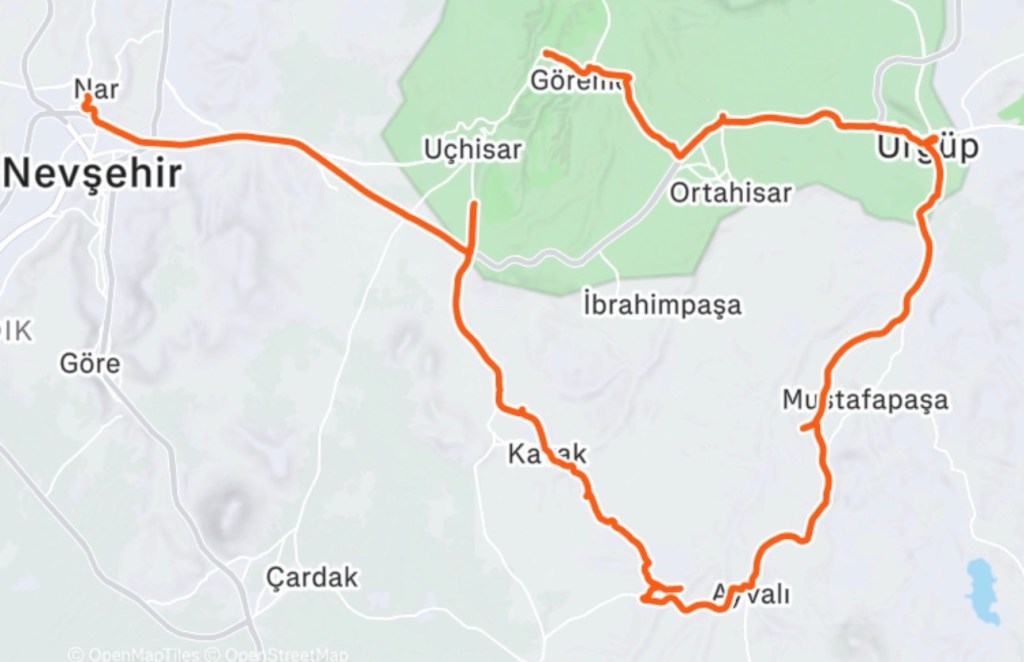
Göreme: https://maps.app.goo.gl/s2q9WWujG6AwAXut9?g_st=ic
The rest day was not much of a rest. Six hours of calls will do that. By the end of the afternoon I was done, in the way that a day of meetings exhausts you more thoroughly than a day of physical work. A lot got done. A lot remained undone. That is usually how it goes.
During lunch I had talked with Ahmed, the nephew of the owner of the Cave Hotel where the Babili family runs things.
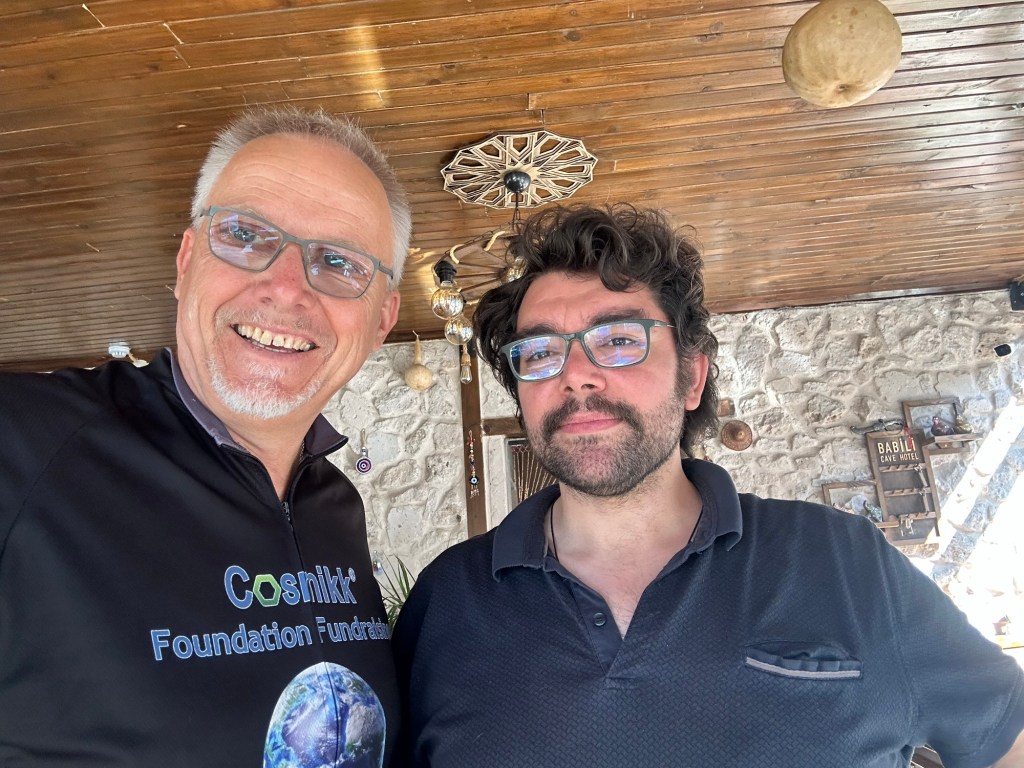
Ahmed is in his mid-thirties, studied law in Ankara, qualified as a lawyer, and then found himself with a degree and no realistic prospect of a job. Turkey has built an enormous number of universities over the past two decades. The graduate population has grown faster than the economy has been able to absorb it, and competition for professional positions is fierce. When his uncle and aunt asked whether he wanted to help out at the hotel, he said yes. He has been there a few months now. His English is good and his grasp of Turkish history and culture is better still. I asked him a lot of questions I had been carrying around, and he answered most of them. That was worth more than the lunch.
In the afternoon I had a call with my kids. A thunderstorm was building while we talked. Afterwards I went out for a quick dinner at a nearby restaurant, and later I reached out to a friend who has connections in Tbilisi, Georgia, to get more information about the train from Tbilisi to Baku and how the ticket situation works. So much for the rest day.
The next morning I was somewhat in a bad mood and needed a while to get going. It took me a few kilometers to work out what I wanted. The question on my mind was whether to push east or stay and spend more quality time in Cappadocia, maybe another night in Göreme to watch the balloons. As the day went on the answer became clearer. I stayed.
I cycled about fifty kilometers in a long loop through the region. At some point Komoot, set to road bike mode, lured me onto a gravel section again. I ended up pushing Rosinante for about an hour through it, which was not the plan, but the scenery made it difficult to complain. That is where I met Jake, a twenty-eight-year-old cyclist from Oxford.
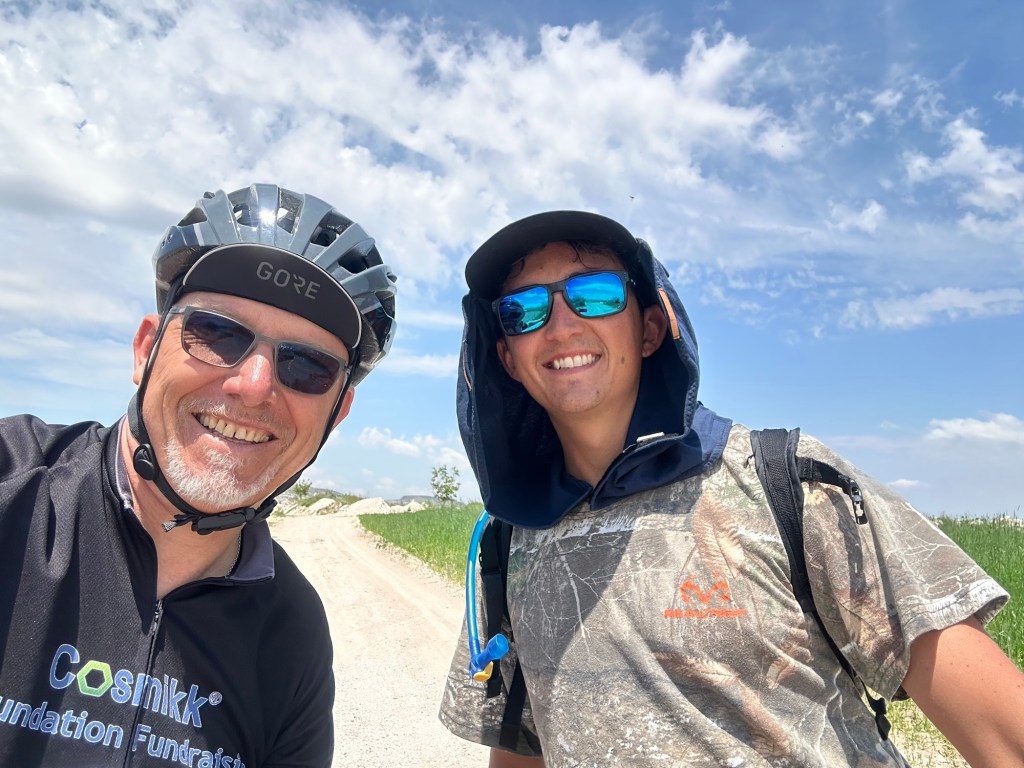
He works as a travel agent, specializing in luxury travel, and by his own account does not particularly enjoy it. His solution is to quit every so often, go on a six-month tour, and then return and get hired again. The cycle repeats. He sees work more as a means to get somewhere than as an end in itself.
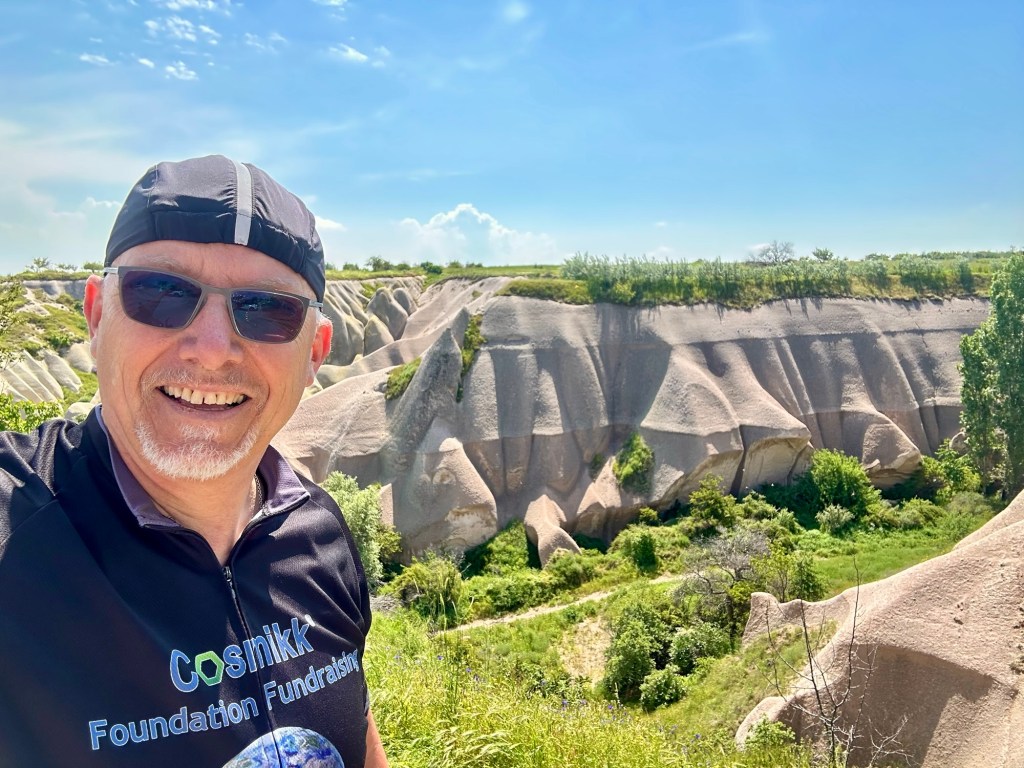
He pointed me toward a village and a valley worth exploring. I went, and he was right. It was beautiful, and it added considerably to the already unhealthy number of photographs I took that day.
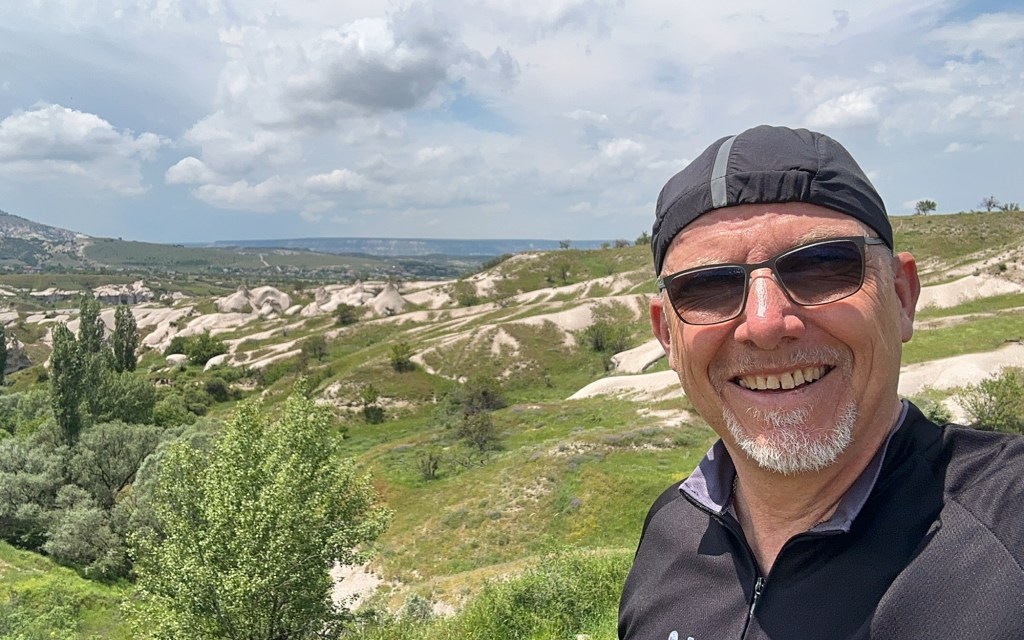
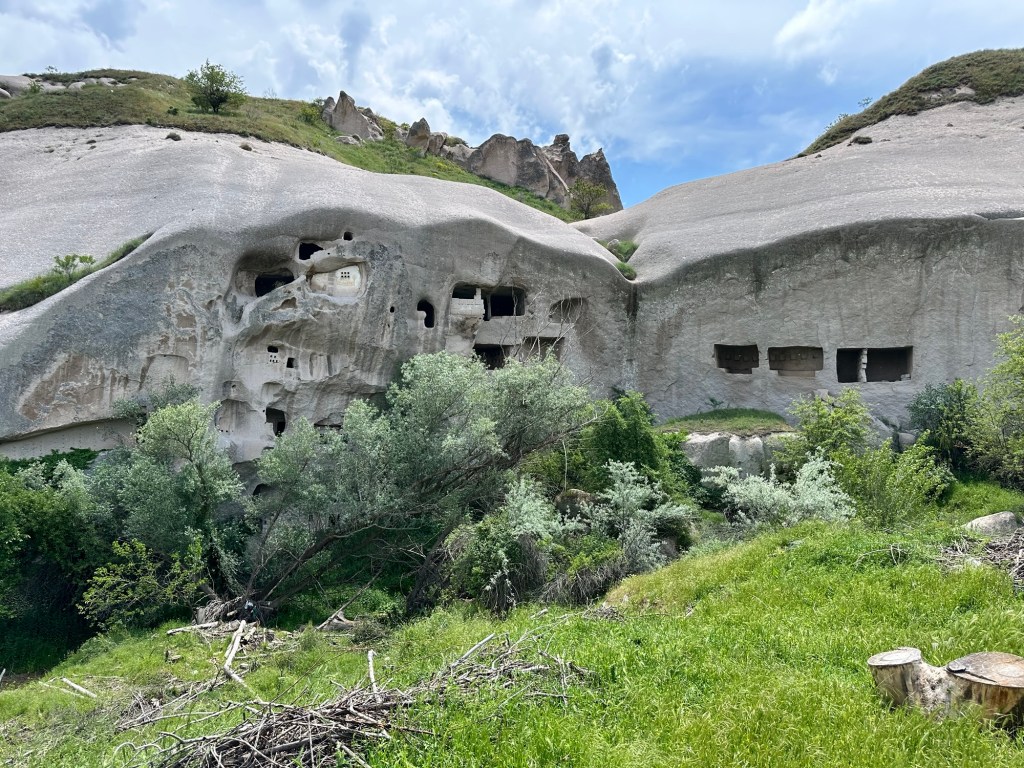
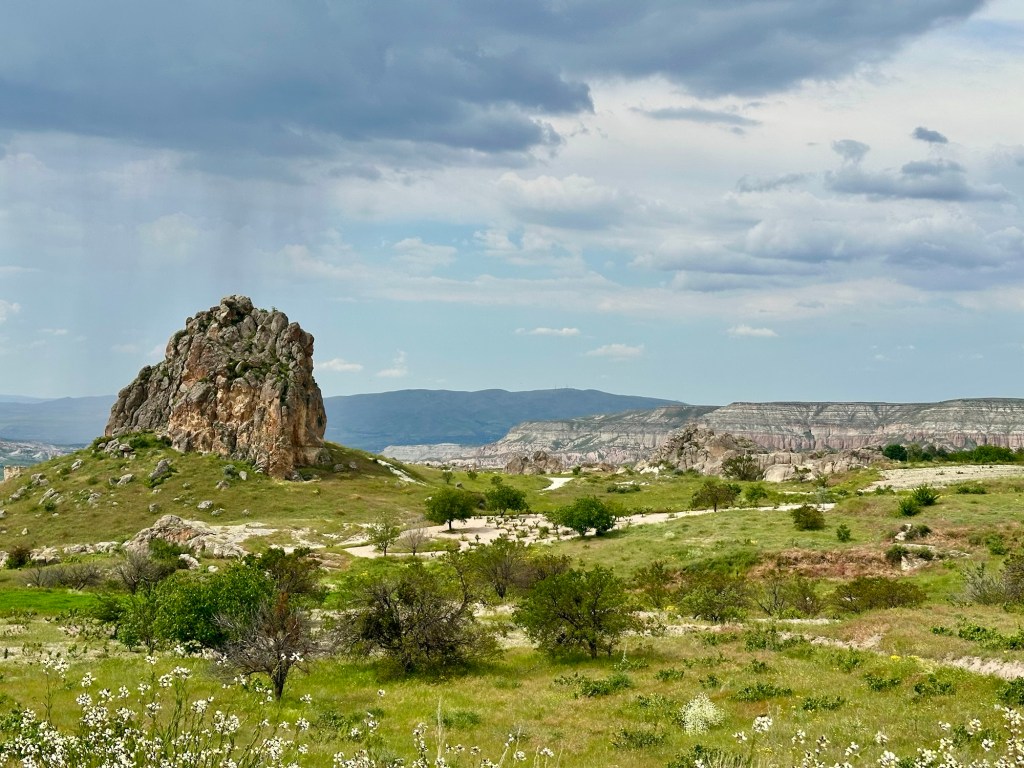

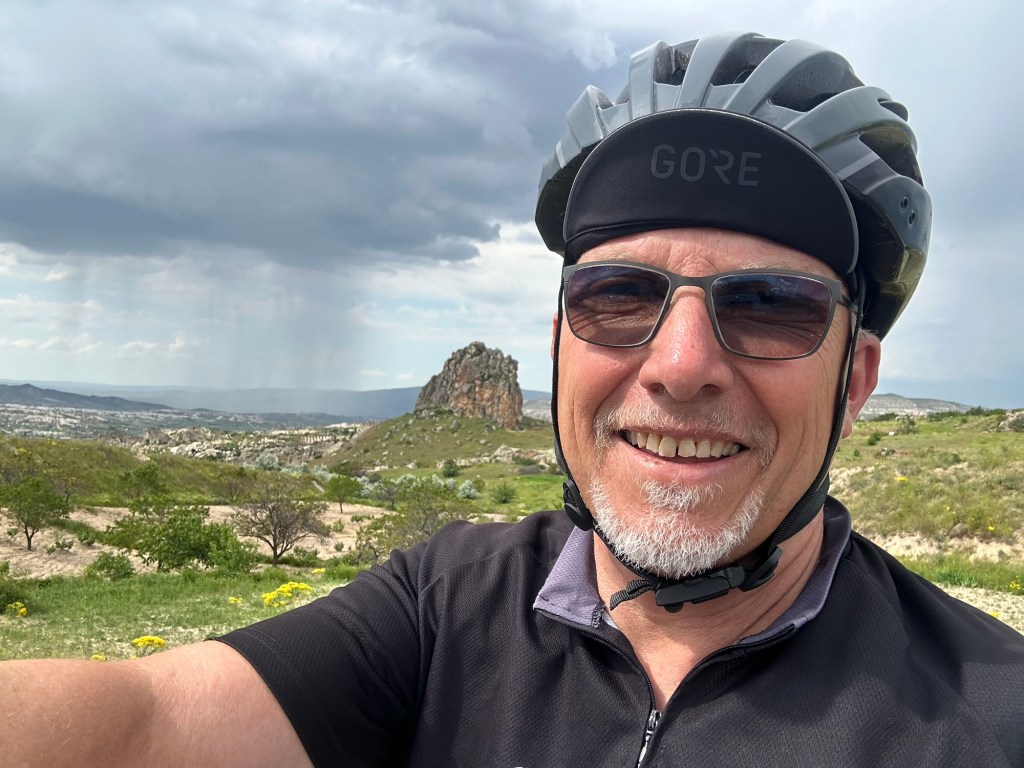
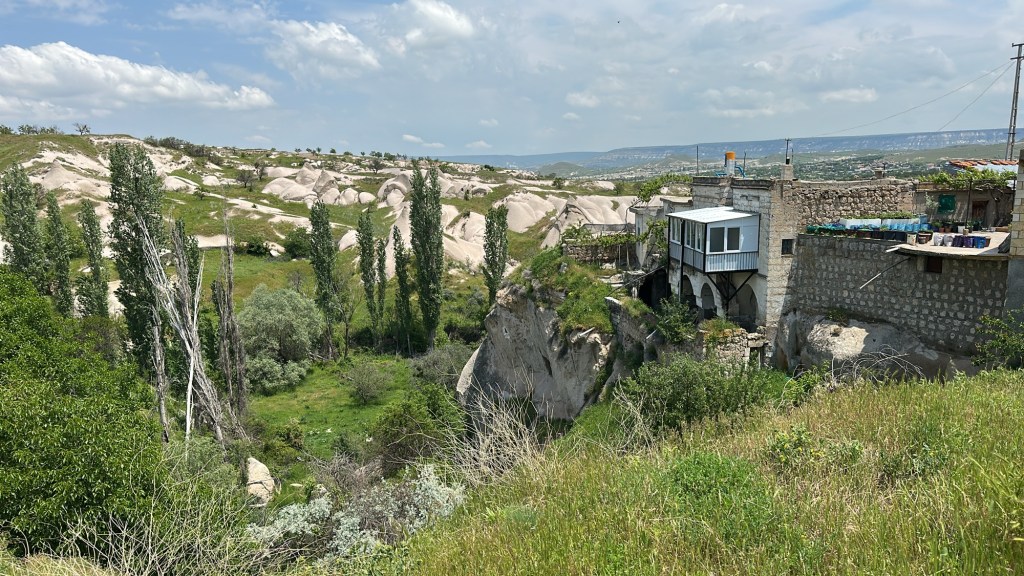
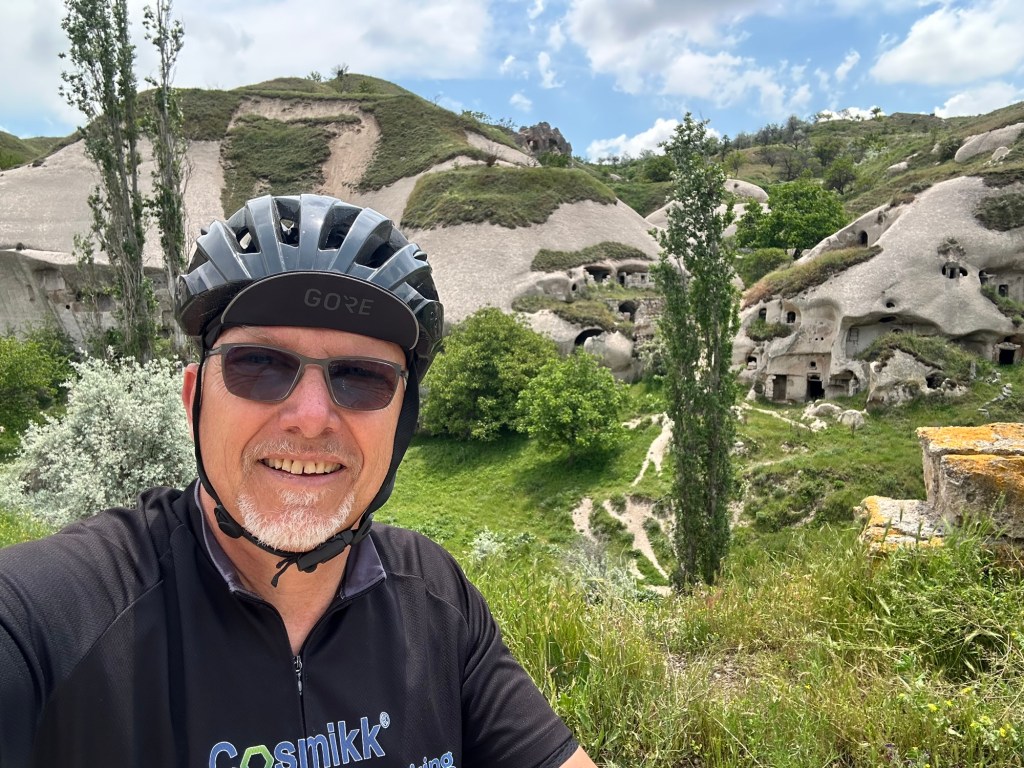

It was one of those days where you stop every few minutes because you cannot help it. The landscape here is difficult to describe to someone who has not seen it. The rock formations, the light, the scale of it. I stayed away from the tourist centers entirely and had the valleys mostly to myself.
On my tour I came by vineyards, which made me wonder. Wine, in an Islamic country where alcohol is considered „haram“ (forbidden). As it turns out, Turkey has been making wine for several thousand years, long before Islam arrived. The Hittites were at it, then the Greeks, then the Romans, and the tradition never quite stopped. Cappadocia today is one of Turkey’s most respected wine regions, with volcanic soils and high altitude producing serious bottles from native grape varieties like Öküzgözü and Emir. Alcohol has been legal since Atatürk founded the secular republic in the 1920s, though the current government has done its best to make it inconvenient — steadily raising taxes, restricting advertising, and limiting where and when it can be sold. The amount of vineyards however is still growing.
In the afternoon I rolled into Göreme. It is spectacular yet very much a tourist town, and I had a pita and something to drink before a second thunderstorm was brewing up. I bought water and groceries, and headed up into the hills to find a wild camping spot with a view over the Göreme valley for the morning.
I was pushing uphill in the rain when I saw a sign for a campground. I had stopped looking for campgrounds some time ago and the sign caught me off guard. I turned in without much deliberation. Ahmed, the owner, came out and helped me pitch the tent quickly so I would not get too wet. It was a small, quiet place.
My neighbor turned out to be a Japanese cyclist named Morito.

Moritosan is seventy-four years old and currently about three and a half months into a tour that has taken him through Portugal, Spain, France, Italy, Greece, and Turkey. After Turkey he is not certain where he will go next. He is in no hurry to return home. We had a long dinner conversation. He is good company and, at seventy-four, a fairly inspiring example that adventure knows no age limits.
My parents were both about Moritosans age when they passed away. Secretly, also I never expected to live longer than that. All my predictions and plans end when I am 75. maybe I should rethink that.
He went to bed early because he had booked a balloon flight for the morning. I was walking across the campsite when Doris and Knut, a German couple, invited me for a glass of wine. They had also brought in Ingrid and Jerry from the Netherlands, and the five of us spent the evening trading stories from Georgia, Azerbaijan, Armenia, and eastern Turkey.
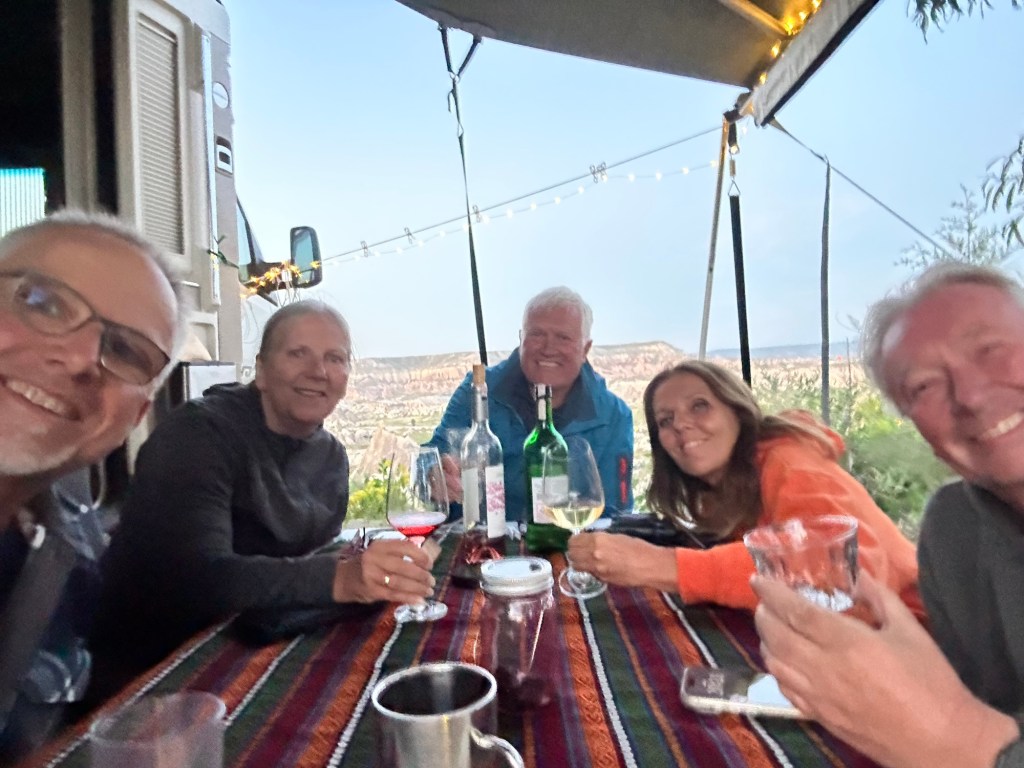
All of them had traveled there. None had made it to Kazakhstan yet, and none had managed to cross the land border into Azerbaijan, which was useful to know. Ingrid and Jerry spoke about Armenia with the kind of enthusiasm that makes you reconsider your own route. I had not planned to go there, but I may reconsider if time allows.
It turned out that Knut, like Morito-san, was a retired engineer who had spent his working life moving between countries and projects. The two of them had that particular quality that comes from decades of showing up in unfamiliar places and figuring things out. Listening to engineers who have worked across the world talk about what they have seen is its own kind of education. The wine ran a little long and we went to bed around eleven.
The night was short. The balloons were early.
Some evenings on the road go like that. You set out to camp alone and end up at a table with a Japanese endurance cyclist, a retired German couple, and two Dutch travelers who have been to all the places you are heading. The conversations you have with people who travel far and into unfamiliar corners are a different kind of conversation. The perspective is different. The observations are different. There is no shortcut to that kind of talk.
Cappadocia has a way of making you stay longer than you planned. The beauty of it is almost too much. If you have eyes for it, it keeps giving.