


I know this probably only interests myself …
Anyway, here is an overview of the differences and commonalities of the two French populations in Canada.
Before this trip, I only knew of one of them and nobody on my trip could really answer the many questions I had to my satisfaction.
So, here is an overview which was generated using ChatGPT.

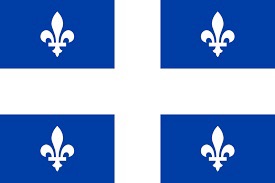
The Québec Flag
• The Fleurdelisé features a white cross on a blue background with four fleurs-de-lis in each corner, symbolizing the French heritage of Québec. The white cross represents Christianity, while the fleurs-de-lis are traditional symbols of French monarchy and culture, evoking the province’s French colonial roots and Catholic faith.
The Acadian Flag
The Acadian flag consists of the French tricolor (blue, white, red) with a yellow star (the Star of the Virgin Mary) in the blue section. The tricolor represents the French origin of the Acadians, while the yellow star symbolizes the Acadians’ Catholic faith and serves as a guide for their perseverance and survival after the Great Expulsion.

The Acadian flag, though it incorporates the French tricolor (blue, white, and red), was actually designed in 1884, long after the original Acadian settlement and the creation of the French tricolor flag (which became prominent during the French Revolution in 1789).
Origins of Quebeckers (Québécois):
• Early Settlement: French settlers arrived in New France (Québec) in the early 17th century, with Samuel de Champlain founding Québec City in 1608. Champlain is often considered the “Father of New France.”
• “Filles du Roi” (1663-1673): The Filles du Roi were approximately 800 young French women sent to New France by King Louis XIV to increase the population. They were crucial in helping stabilize the colony and ensure demographic growth.
• Location: Primarily settled along the St. Lawrence River, which became the central artery of New France’s economy and governance.
• French Monarchy Influence: Under the rule of King Louis XIV, New France, including Québec, was governed by policies intended to establish a strong, self-sustaining French presence in North America.
Origins of Acadians (Arcadiens):
• Early Settlement: Acadians were French settlers who colonized Acadia (modern-day Nova Scotia, New Brunswick, Prince Edward Island, and parts of Maine) starting in 1604. The colony was founded by Pierre Dugua de Mons, with Jean de Biencourt de Poutrincourt and Samuel de Champlain also playing key roles.
• Motivation for Settlement: The French aimed to establish a foothold on the Atlantic coast for economic (fishing, fur trade) and strategic reasons. The fertile land around the Bay of Fundy also promised good agricultural returns.
• Acadia and New France: Acadia was part of New France, but developed separately from Québec, with more decentralized, rural communities.
• French Kings: Acadia’s settlement began under King Henry IV, but its growth coincided with the reigns of King Louis XIII and King Louis XIV, who expanded French colonization efforts.
The War Between the French and British: The Seven Years’ War (1756–1763):
• Conflict Background: The French and British had long been rivals in North America, competing for territory and resources. This rivalry culminated in the Seven Years’ War, known in North America as the French and Indian War. The war was part of a larger global conflict between the two powers.
• Causes: The war was triggered by territorial disputes in North America, especially in the Ohio Valley, as both France and Britain sought to expand their colonial holdings. Control over the fur trade and access to natural resources also fueled tensions.
Impact on Québécois:
• Québec as the Center of New France: Québec, as the capital of New France, became a primary target for British forces. The colony was crucial due to its economic (fur trade, agriculture) and strategic importance.
• Battle of the Plains of Abraham (1759): This decisive battle occurred near Québec City, where British forces, led by General James Wolfe, defeated French forces under General Louis-Joseph de Montcalm. This marked the beginning of the end for French control in North America.
• Fall of New France (1760): After the fall of Québec City, Montréal also surrendered in 1760, effectively ending French political control in the region. The Treaty of Paris (1763) officially ceded New France to Britain.
• Effect on the Québécois Population:
• After the British conquest, French settlers in Québec became subjects of the British Crown, but they were allowed to retain their language, religion (Catholicism), and civil law (later formalized in the Quebec Act of 1774).
• Despite British political rule, the Québécois preserved their French identity, and the concentrated population along the St. Lawrence River allowed their culture and language to endure.
• British rule, however, brought new pressures, as British merchants and settlers moved into the region, increasing tensions over land, language, and governance.
Impact on Acadians (Arcadiens):
• Acadia as a Strategic Battleground: Acadia’s location along the Atlantic made it a critical region in the war. Control of Acadia shifted several times between the French and British before the war, and during the War of the Spanish Succession, Britain gained control of the region through the Treaty of Utrecht (1713).
• The Great Expulsion (1755-1764):
• In 1755, during the lead-up to the full-scale conflict of the Seven Years’ War, the British initiated the Great Expulsion (Le Grand Dérangement) of the Acadians, fearing they might support the French military efforts. Over 10,000 Acadians were forcibly deported to various locations, including the American colonies, France, and Louisiana, where many became known as Cajuns.
• This event devastated the Acadian population, scattering them across the continent and severely disrupting their communities. It also solidified British control over the region. • Resettlement: Some Acadians eventually returned to the Maritimes, particularly New Brunswick, after the war, but they were no longer the dominant population in the region. The expulsion and resettlement resulted in the fragmentation of Acadian society, leading to a more isolated and marginalized existence.
• Effect on the Acadian Population:
• Unlike Québec, where the population remained largely intact, Acadians were dispersed, and their cultural and demographic growth was stunted. Many Acadians returned to find their lands occupied by British settlers, leading to long-lasting social and economic difficulties.
Development of Quebeckers (Québécois):
• Post-War British Rule: Following the British conquest, the French-speaking population in Québec was allowed to retain its language, religion, and legal system. This enabled the Québécois to preserve their identity despite being under British control.
• Cultural Preservation and Growth: The concentration of French settlers in Québec, along with policies like the Quebec Act of 1774, helped to maintain a strong sense of French identity in the province. Québec became the cultural and political center for French-speaking Canadians.
• Filles du Roi Legacy: The contribution of the Filles du Roi ensured the growth of a stable, family-based population, which helped strengthen Québec’s social fabric even under British rule.
• Rise of Nationalism: Over time, especially after the Quiet Revolution (1960s), Québec developed a strong sense of nationalism and fought for political autonomy, leading to movements for sovereignty and efforts to protect French language and culture.
Development of Acadians (Arcadiens):
• Post-War Acadian Fragmentation: The Great Expulsion significantly disrupted the Acadian population. Though some Acadians returned after 1764, many were resettled in small, isolated communities, particularly in New Brunswick.
• Cultural Survival: Acadians maintained their French language and Catholic faith, but their dispersed population made it harder to retain the same level of cultural cohesion seen in Québec.
• Economic and Political Marginalization: Acadians became a marginalized population within the British-controlled Maritimes. They faced economic hardships, as much of their land was taken by British settlers, and they lacked political power compared to the more centralized and influential Québécois.
• Legacy of the Great Expulsion: The trauma of the Great Expulsion left a lasting impact on Acadian society, contributing to a strong sense of identity but also to feelings of displacement and loss, which differentiate them from the more cohesive Québécois society.
Reasons for Different Development:
• War and Geopolitical Context:
• Québec: Survived as a centralized and culturally strong region despite the British conquest. Its population remained intact, and the British allowed the French-speaking population to maintain their culture through policies like the Quebec Act.
• Acadia: The Great Expulsion and the strategic importance of the region led to the near destruction of the Acadian population, leaving them dispersed and marginalized.
• Cultural Concentration vs. Dispersal: • Québec: Benefited from a concentrated population, a stable family structure (helped by the Filles du Roi), and policies that allowed the French language and Catholicism to flourish.
• Acadia: The dispersal of the Acadian population weakened its cultural continuity and development, leading to more isolated and rural communities.
• Economic and Political Evolution: • Québec: Developed into a politically and economically significant region within Canada, with a growing sense of nationalism and political autonomy.
• Acadia: Remained economically disadvantaged and politically marginalized within the British-controlled Maritimes, particularly after the Great Expulsion.