

Over the past three years, I cycled a total of 7,600 km across Canada – through all 10 provinces, across 4 time zones, and spent a total of about 12 weeks in the saddle, cycling more than 100km each day. I did this completely alone and unsupported, sleeping in a tent and living off what I could buy along the road. I crossed the Rocky Mountains, and the Prairies, passed by the Great Lakes, followed the St. Laurent Stream, and explored the Maritimes. All to raise donations for the work of the Cosmikk-Foundation.
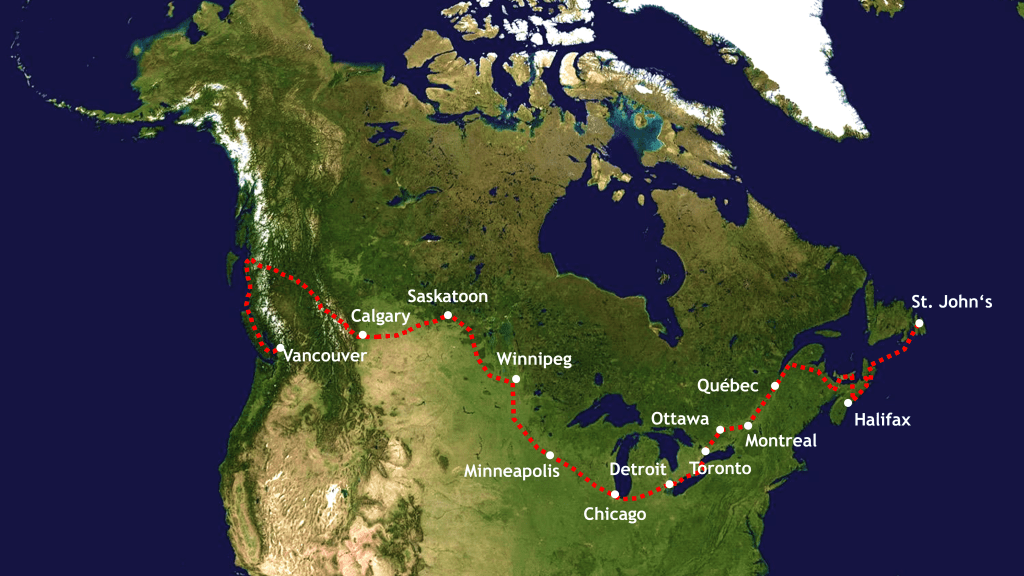
Many people don’t think this is possible. Others can’t see why one would do something crazy like that. But this journey wasn’t just about seeing the country or about testing my endurance. It also helped me to recalibrate my perspective on life, on dealing with my strengths and weaknesses, and on managing my ego. While navigating everything from steep climbs, rainstorms, and heavy headwinds to long stretches of isolation and technical breakdowns, I learned lessons that directly translate into leadership and managing your inner world in tough times.
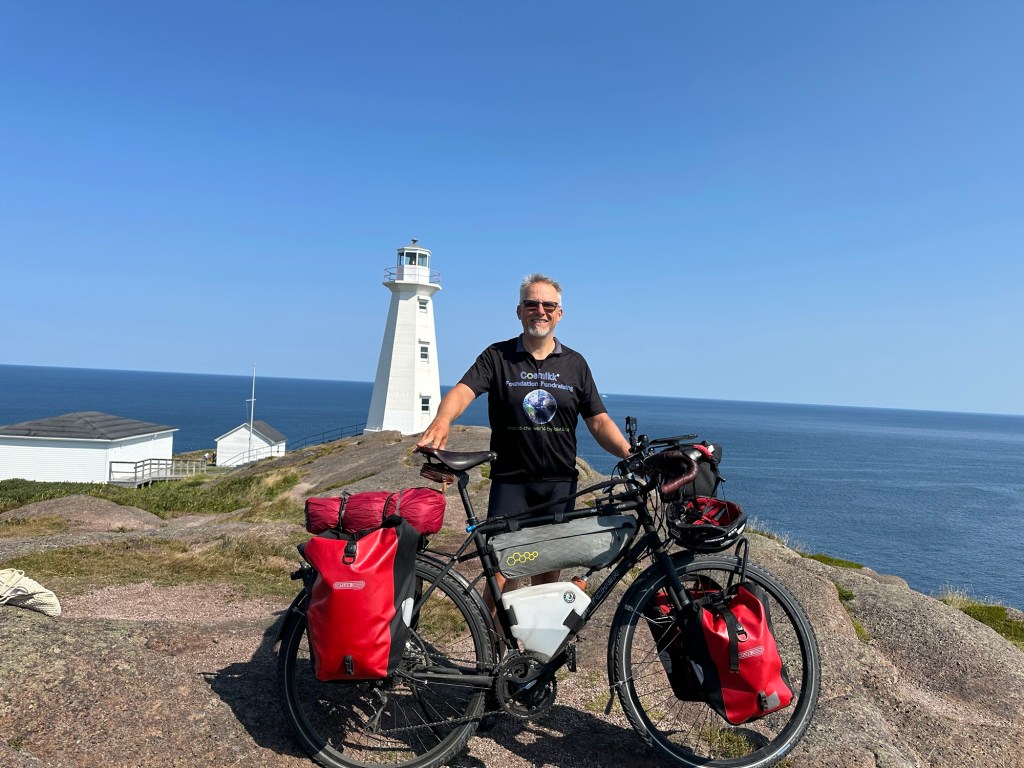
As an entrepreneur, book author, podcast host, and inventor of the resilience instrument Executive FiRE Index, these insights are particularly meaningful to me.
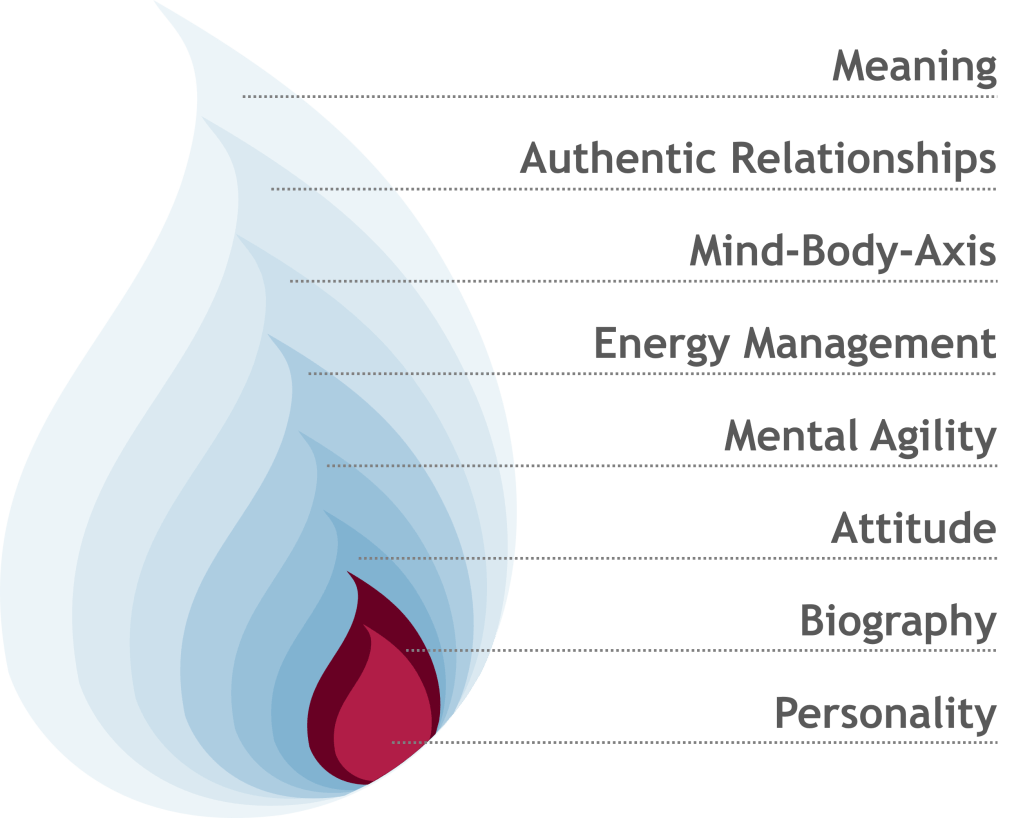
The Executive FiRE Index measures the psychological, social, and physical aspects of a leader’s resilience. In other words: it analyzes their inner FiRE. This acronym stands for Factors improving Resilience Effectiveness.
As mentioned, the primary purpose of my journey was to raise donations for the work of the Cosmikk Foundation. This organization provides funds, knowledge, and tools to humanitarian NGOs in crisis areas. Their mission, rooted in the concept of “Helping the Helpers,” focuses on empowering these organizations to afford high-quality coaching for their people. By investing in the leadership and resilience development of those on the frontlines, the foundation ensures that organizations can maximize their impact where it is needed most. Currently, the Cosmikk Foundation is focusing on supporting NGOs in Ukraine, where they are working to strengthen the capabilities of those responding to the physical, emotional, and mental aspects of this ongoing humanitarian crisis.

My lessons from the road align closely with the principles we share in our work, helping others grow as leaders in challenging environments. So, as I look back at the past three years, here are some key insights from my journey across Canada that I would like to share.
Personality: Know Your Inner World
Knowing yourself is crucial when engaging in any challenging endeavor. Crossing Canada on a bicycle demanded much more than just fitness and physical endurance from me. When you’re alone on the road for long stretches, with unpredictable weather and terrain, you must deeply understand your own limits, needs, and motivations. For me, it required that I know my emotional and mental strengths and weaknesses very well. Nobody is strong all the way through. I am certainly not. In fact, the question for me was not if I could muster up the required strength for the entire tour. I knew that this was not possible for me. I know from my results in the Executive FiRE Index that I was a rather sensitive and emotional person and that I would have crises along the way. What was more important for me was that I had to learn ways how to work with my inner team, and the different aspects of my personality, to get back into an optimal or at least acceptable state to keep on pushing myself. My work in the resilience field has helped me a lot in developing the needed habits and self-awareness. This helped me to manage my energy, recognize when I needed rest, and stay mentally grounded through the inevitable challenges. Knowing my strengths allowed me to push through tough moments while acknowledging my weaknesses helped me make smart, calculated decisions. In a journey as demanding as this, self-leadership became my most valuable tool for overcoming obstacles and eventually reaching Newfoundland.
Biography: Learn always and make Your biggest Fear an Ally
I started my fundraising project back in 2017 with a tour from Heidelberg to Verona. It was great to cross the Alpes and reach different countries simply with your own strength. In the following years, I would set out to cycle a tour through Europe each year of 1,000 to 3,000km in length and try to raise donations with this – with varying success. Each tour was different and I learned new aspects about different countries and about myself each time. I also acquired new skills with every trip starting from knowing how to fix a ruptured chain over filtering dirty water to making fire with wet wood. I also learned that I needed to keep this project interesting both for myself so that I would train and keep myself in shape, and for the donors so that they would feel inspired to give money year over year. So, a couple of years into the project I asked myself “What are you most afraid of when it comes to cycling long distance?” The answer came immediately: “Cycling around the world”. Yes, that would scare me big time. That was the start of my project “Around the World by Bike”. In 2024, 8 years into the project, I had covered a total distance of 20,000km and had at least as much still ahead of me.
By learning from my own life story, I could identify the patterns and behaviors that had helped me succeed or fail in the past and apply these insights to this project. It turned out that these were in fact invaluable on the road. Additionally, knowing my own biography helped me stay grounded in my purpose, keeping me motivated through the hardest days. It reminded me why I had chosen this challenge in the first place and how it aligned with my core values of growing as a person, taking controlled risks, and inspiring others to grow themselves.
Attitude: Keep up your Faith
Whether cycling with a broken gear shift, pushing through severe thunderstorms, or cycling on a busy highway with no shoulder, I sometimes had to dig deep to keep going. Perseverance is critical as progress often feels slow, but as long-distance athletes usually say “slow and steady wins the race”. Even when I felt exhausted or pitied myself a little too much, I reminded myself that I had chosen this and why I started this journey in the first place. When that did not work, I thought of my friend Thorsten, a longtime friend and competitive mountain bike cyclist. He had been injured in a severe cycling accident in the Spring of 2024 and was paralyzed for the time being from the neck down. He was in hospital now for many months working hard to gain part of his mobility back. Whenever I visited him, he would be super positive and tell me about the little progress in mobility or sensory perception he achieved together with his team of physiotherapists and technicians who all loved him for his fighting spirit. So, when I felt scared, exhausted, or upset, I asked myself “What would Thorsten do right now?” These internal dialogues, rooted in self-reflection, were key to maintaining my spirit. Leaders, too, must inspire themselves and their teams to keep moving forward despite challenges, knowing that the path to success is rarely a straight line.
Attitude: Be ready to Take Risks but Manage Your Ego
A project like mine is not possible without entering into some level of risk. Some of it you can influence but some of it you can hardly anticipate let alone mitigate. On several tours, I had to ride through heavy thunderstorms with flash and lightning simply because there was nowhere to seek shelter. On another occasion, an oversized truck with a house on it almost decapitated me on a narrow highway in Manitoba. I could save myself by driving to the curb at the last second. Since I wrote a daily blog and put myself out there in the limelight of social media, I felt a tendency of always wanting to appear brave and in charge like some sort of hero. I noticed however that this “hero identity” can become problematic. The definition of bravery is “Being afraid of something and doing it anyway”. Unfortunately, the definition of stupidity is exactly the same. It is the outcome that makes the difference. As I was approaching Newfoundland in 2024 I learned from other cyclists who I met along the way that the 900km of highway across the island were both tedious and dangerous to cycle because of large trucks at high speeds and small shoulders. However, I felt a strong urge to take this route despite the risks, simply because I wanted to complete my project by the book. It took me a long time and a lot of inner debate to finally arrive at the decision to change my route and explore other parts of Prince Edward Island and Nova Scotia instead which were much nicer and also safer to cycle. In the end, it really did not matter to anybody else but me, because despite social media nobody really cared about the details of my project and how much risk I was going to take for it. What my followers really cared about however was to participate in my daily struggles, my encounters, as well as in my emotions and learnings. The “hero identity” is also prevalent in the business world where people are willing to sacrifice their private and family lives as well as their mental and physical health to always appear strong and in charge. But in the end, it is not the quantity of hours you worked but the quality of the life you lived that really counts.
Attitude: Be grateful – You cannot Do it without Help
Even on the hardest days, I learned to find reasons for being grateful – whether it was a short break from the wind, a chat with a stranger at a gas station, or a beautiful sunset with a can of lukewarm beer in my hand. During this project, gratitude became an essential practice that helped me stay positive and grounded. Even if it was me doing the actual cycling, this project was only possible because a lot of people actively supported me in doing this. My colleague Uwe managed the company while I was gone, my wife Carolin and our kids supported me emotionally, and our marketing team helped to create great social media content to help spread the word and mobilize donors. We often forget that we have so much to be grateful for starting from our health or the country, and the family we were born into. In self-leadership, practicing gratitude builds resilience and fosters a positive mindset. In leadership, practicing gratitude for the small wins and acknowledging team efforts fosters a positive environment. By recognizing and celebrating the contributions of others, leaders can build a culture of appreciation and motivate their teams toward continued success.
Mental Agility: Keeping a Balanced Approach while Preparing Yourself for the Unexpected
From sudden rainstorms to grueling climbs, I had to constantly adjust to the changing environment. Preparation, planning, and anticipation would bring me a long way but you just cannot plan everything – simply because it requires too much time and I rarely had all the required information available. Be it wildfires that got very close to my route or thunderstorms that blew over trees and blocked roads, it required a certain risk tolerance and more importantly a healthy intuition to deal with these ambivalent situations. In project management, there is a saying that goes “Planning replaces coincidence with error.” In the business world, good leaders are the ones who find the right balance between safety and risk tolerance and who learn to trust their gut feeling taking in all available data by listening to their team members, clients, and other stakeholders. Wise resource management means planning for the unexpected while keeping a balanced approach to risk as well as trusting your intuition to ensure that your organization remains agile and prepared for future demands. It also requires taking ownership of your own emotional responses to change and be mindful how they might influence your decisions and actions.
Mental Agility: Don’t panic, Face your Emotions and Work the Problem
When things went wrong – whether it was a flat tire, a ruptured chain, or a broken rim in the middle of nowhere – I had no one to rely on but myself. On an earlier tour to the North Cape at the tip of Norway, my rear wheel collapsed under the weight it was carrying just north of the Arctic Circle. At first, it was one spoke, then several, then the entire rim. It took me 600km with a rental car to find a back wheel to replace my broken one. Surprisingly, there were not so many cycling shops up there and the supply chain crisis following the Covid pandemic did not help either. It was challenges like these that demanded rigorous honesty with myself, requiring me to think creatively, take full responsibility for finding solutions, and reach out to others to organize help. Leadership often demands the same: quick thinking and calm decision-making under pressure. Leaders must navigate crises with the resources at hand, often under tight deadlines and high stakes. The ability to stay calm, and remain both creative and not too proud to ask for help can make all the difference in these moments.
Mental Agility: Let go of Your Control Illusion
Each day on the road required assessing and managing risks – be it through the presence of dangerous animals, aggressive logging truck drivers, or how much further I could push with a headwind, rain, and limited supplies. I was out there, vulnerable and exposed to nature. In many situations, I was simply not in control of what would happen. At one point, I was caught by a really scary electrical storm in the treeless prairies of Saskatchewan. With a sudden huge temperature drop, strong winds, and big hailstones, I was literally afraid for my life. Out of nowhere there suddenly was a rest area with a toilet house. I jumped in it for cover expecting the roof to fly off any second. After 45 minutes it knocked at the door. Outside was another cyclist, totally soaked, who smiled at me and shouted against the storm “How is your day going?”. It was hilarious, almost too weird to be true. Together we made it to a nearby campground as the hail got a little lighter and were able to get a fire going in a hut to warm and dry ourselves. In another situation, I choose to stay on an unserviced campground next to the Columbia Icefields in Grizzly territory. I slept with bear spray in my sleeping bag knowing that it probably would not help me against a fully grown Grizzly who took interest in me or my stuff. I had chosen a spot where I was surrounded by fellow campers with dogs to maximize my chances. However, at the end, I had to live with the remaining risk. Strong emotions like fear, anger or pride are normal under these circumstances. I had to weigh the pros and cons of continuing a stretch in questionable conditions or stopping early at a questionable place to conserve energy. Self-leadership was key to making these judgment calls, requiring reflection and honest assessment of my capabilities. Knowing when to take calculated risks and when to be cautious is key to balancing short-term gains with long-term outcomes.
Energy Management: Compartmentalize and Endure
I couldn’t focus on the 7,600 km ahead of me – it was simply overwhelming. I still recall the year 2022 when I was flying across the snow-covered Rocky Mountains into Vancouver to start my TransCanada. Seeing the majestic mountains, I got really scared and thought to myself “What have I done? This is madness!” My plan was to cross these mountains but it was too big of a thought. Instead, I set myself daily goals and divided each daily goal into chunks of 10km at a time. Especially when I got tired, I would only focus on completing that next 10km chunk. Mental techniques like this made the journey feel more achievable. Whether it was reaching the next town or covering a certain distance before sunset, breaking the journey into manageable pieces was essential. Self-leadership plays a role here, as setting personal, incremental goals requires self-awareness and discipline. Similarly, leaders need to set manageable goals for their teams to ensure continuous progress toward bigger objectives that seem absolutely impossible to reach. These incremental milestones not only help maintain motivation but also build momentum and allow teams to celebrate wins along the way.
Energy Management: Manage your Negative Self-Talk
On difficult days, it was easy to misinterpret others’ actions or words. But when I assumed positive intent and the benefit of the doubt, I found that interactions were smoother, and I was able to maintain a sense of harmony even in challenging situations. Close to Québec, my power bank was stolen on a campground. I needed it to cool medication which I needed at that time. I was pretty disturbed about this incident and needed to organize a replacement quickly before my medication was damaged by the heat. For a while, my inner dialogue centered around how these people here are not trustworthy although I knew very well that it had been just one person. It took me a while to reach a state where I felt compassion for the person who took it and who now had to live with the guilt of being a thief. Self-leadership requires a similar mindset of giving yourself and others the benefit of the doubt, creating space for better communication and trust. In leadership, assuming the best in others can lead to more productive and trusting relationships. This mindset fosters collaboration, reduces conflict, and encourages open communication, all of which are crucial for a successful and cohesive team.
Energy Management: Be Curious but Stay Away from Energy Thieves
My TransCanada started in 2022, right after the Covid pandemic. Because of my simple way of traveling, I would meet and stay with many people from all walks of life. I met people who had backgrounds, convictions, and options similar to mine. And I met people who had rather different mindsets. I loved learning from each person I met and each host that I stayed with. During my tours, I have encountered three distinct ways in which people react to my project to cycle around the world alone and unsupported. Most people were inspired and amazed. Others were neutral and did not really care. Interestingly, there was also a third group that was offended by it. From these people, I heard statements like “You must be very rich to afford this” or “Why would somebody do something stupid like that?”. Obviously, they felt challenged by the risk and the effort I was willing to take to follow my purpose and it triggered their own belief system. I also met some people who had been struck hard by the effects of the Corona pandemic and who had drifted into the camp of conspiracy theories. All of them were very friendly and hospitable on the surface but deep down they were angry, afraid, and full of broken trust in the system. Some had lost their jobs, some would not talk with their children anymore because of different opinions, and some had even spent time in jail and claimed to have been political prisoners because they participated in a Freedom Convoy towards the Canadian capital Ottawa in early 2022. Part of the leading set of conspiracy theories was that the world was controlled by a powerful elite, like the World Economic Forum, the International Monetary Fund, Big Pharma, or the British Crown. The goal of said elite was to eventually diminish the caucasian race and replace it with more obedient ethnicities. This was clearly a reaction to the ambitious immigration policy of the Canadian government, to grow the population from 30 million people in 2020 to 100 million in the next 80 years mostly by immigration. The theories also questioned the existence of other international stakeholders, geopolitical tensions, or even wars like the Russian invasion of Ukraine. They all were allegedly just a front to hide the bigger plan. I had never met Conspiracy Theorists to that degree before. After some encounters, I learned that the best approach for me was to see if there was an openness for a real exchange of arguments on the other side. When that was the case, I would engage in a discussion. But with some, there was no openness present. Much rather they would get into a rage when talking about their opinions and what had happened to them. Even the fact that I used to work for the World Economic Forum and had been to Kijv during a Russian offensive in March 2024 did not make a difference to some of my counterparts, who had very often never left the country before. Also in the business world, it is important to surround yourself with people who both challenge and support you and who give you energy by doing this. Energy thieves however live off your drive and positivity and will eventually try to diminish it. It is important to recognize the difference and minimize the exposure to what is absolutely necessary.
Mind-Body-Axis: Work with Your Body rather than Against it
I know that I have a strong will and a lot of persistence bordering on stubbornness. To a degree, this is helpful when you want to reach a goal but there are also limits to it. On an earlier tour, I had just finished a book manuscript after many months of writing. After handing it in to my publisher, I went right into the saddle without much preparation and with overweight and I paid the price for it during the tour. Everything felt hard that year and I suffered badly. After the tour, my wife and our kids had a talk with me. Going forward they were willing to support my project but only if I invested in thorough preparation, year over year. I took that lesson to heart and prepared myself much better since then. Over the years I learned that being successful in long-distance cycling meant listening to my body and adjusting my pace, stopping and resting when necessary, or pushing ahead when conditions allowed. As a cyclist, you never let a good tailwind go to waste, instead, you ride as long as you can. On the other hand, I also had to accept that I need a rest day every now and then. The frequency depends on the terrain and the daily distance but it does not make sense for me to work against your body. Cycling unsupported also meant I had to carefully ration my supplies. I learned that if I found quality food or drinking water in the middle of nowhere, I needed to use it – even if I wasn’t hungry or out of water yet. This experience taught me to anticipate my needs before they become critical, an essential aspect of self-leadership. But on the other hand, you cannot afford to carry all kinds of supplies with you because your bike would get too heavy. So finding the balance that was right for me was key. The same holds true when you lead a team. A healthy challenge and scarce resources are the mother of invention but it does not make sense to continuously pressure a team that has depleted resources. Making sure that your team members can regularly recharge their batteries is essential for high quality, strong creativity, and entrepreneurial thinking.
Authentic Relationships: Reach out, Connect with Helpful People, and Learn to Ask for Help
Although I traveled solo, the support from fellow cyclists, locals along the way, and loved ones at home was invaluable. On Vancouver Island, an elderly guy on a Harley Davidson passed by and pulled over. After some chatting, he invited me to stay overnight with him and his wife. He was a perfect stranger who I had never met before. A couple of years ago his wife and he had done a TransCanada Tour themselves. Of course, I stayed with them and we had a great time together. In fact, we are still in touch today. Two weeks into my 2024 tour, I felt lonely and homesick and I had asked my family to organize a motivational call for me. It was only a short call but it meant the world to me to feel connected with my loved ones back home. When I was running out of water in the hot and dry vastness of the Prairies in Manitoba, I asked locals for water or directions. Also, I was typically in regular exchanges with friends who were in the country or fellow cyclists who I had met along the way. I found it to be very important to share what was happening to me with others who could appreciate how I felt going through something like that. Leadership is about building those same kinds of trusting and supportive connections and knowing when to reach out and ask for help. From cheering each other up, and sharing information with other cyclists to relying on the kindness of strangers for shelter or directions, I learned that collaboration and building relationships can make even the most challenging journeys easier. Even in self-leadership, it’s important to recognize when to seek help and draw on the strengths of others. Leaders need strong networks to exchange ideas, gain support, and create synergy within their teams and communities.
Meaning: Remember why you do this
My emotional responses to the hardships I faced on the road were often harder than the physical challenges themselves. Especially at the beginning of each tour, I found it hard to strap in and get used to the lifestyle of being on the road without the protective layers and safety nets that we are all used to. The true challenges though revolved around the people in my life who I cared deeply for. During my 2023 tour, my mother-in-law passed away and I was torn between aborting the tour immediately, continuing it, and missing the funeral or finding another way to handle this sad situation. Dealing with my emotions of guilt, shame, and self-pity of not being by the side of my wife and trying to find a solution that worked for me and that I could stand behind was the hardest part. It was challenges like these that demanded putting life events like the death of a beloved person in perspective to the purpose of my project. People who knew me well gave guidance but in the end, I needed to be able to fully own my decision. I ended up shortening the tour significantly but I still missed an important part of the ceremonies. But I was ok with this decision and so was my family. Leadership can feel isolating too when you have tough decisions to make. They might not affect life or death but maybe the career of an employee and the livelihood of his or her family. Being aware of your values is key to staying true to yourself and guiding others through tough times. In those quiet, solitary moments, I had to rely on my inner North Star to keep going. Self-reflection played a big role in these moments, as I needed to continually check in with myself to stay on my course. Leaders often face tough decisions alone, but developing mental fortitude helps them navigate uncertainty and keep their team motivated, even when the road ahead seems daunting.
Through all of these experiences that I was able to make on the road, I learned that both endurance cycling and leadership – especially self-leadership – require many different aspects of resilience, like self-awareness and a growth mindset, a positive attitude and a sense of gratitude, a strong adaptability and a healthy intuition, as well as contact to supportive people and a clear North star in terms of your purpose.
The lessons I gained on this journey will stay with me long after the final kilometers have been pedaled. Whether you’re leading a team, embarking on a personal challenge, or deepening your self-reflection, these insights can provide a roadmap for navigating the unexpected twists and turns that come your way.
About the Author
Karsten Drath is one of the leading resilience experts in Germany. He holds a degree in engineering and an MBA, is a certified executive coach and a naturopath for psychotherapy. He is also an author, lecturer, speaker, podcast host and enjoys cycling around the world. Karsten has more than 25 years of leadership experience in several international roles and is one of the managing partners of Leadership Choices GmbH, of COS GmbH, and co-founder of the non-profit Cosmikk Foundation.
charming! Breaking: Major Technological Advancement Announced in [Industry] 2025 satisfying