

Distance: 92km
Elevation: 880m
Jack and I continued chatting in the morning but this time in English. It was raining so I had no real rush. And I had so many questions.
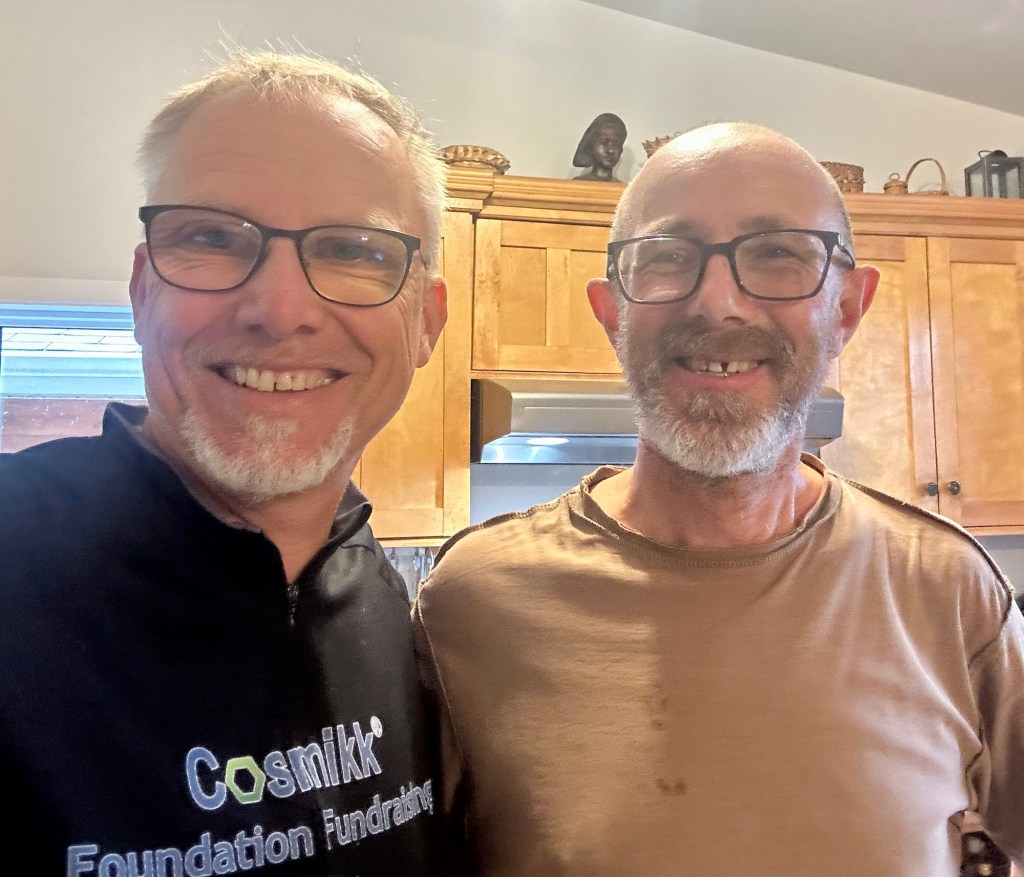
Here is couple of things which I learned:
- The term “red skin” came from the fact that the indigenous people in New Foundland used red clay as a repellent against mosquitoes and dear flies. When the French first met them the term “redskin” (peau rouge) was coined.
- The reason why First Nations people have no beard is that most of them as per their genetic predisposition have no (or very little) body hair.
- Within each band (Stamm) every member belongs also to a clan e.g. eagle, bear or owl. You cannot have kids with people from the same clan. These structures were implemented to avoid inbreeding.
- Having partners that are non-indigenous is not frowned upon. In contrary, the Méti (Mischlinge) turned out to be one survival strategy of First Nations.
- Since 1600 most indigenous people died because of diseases that the European invaders brought with them. Allegedly, the English even gave out bed sheets from people who had small pocks (Windpocken) so these viruses were actually consciously used as biological warfare.
- There was no private property for each band member other than what was given to this person by the tribe. This has changed meanwhile.
- The social status of an individual in a band was determined by the skills that this person would use to help others develop and the tribe prosper.
- Leadership roles were often assumed by both women and men.
- The greatest wealth of a band were their children with their individual potential and strengths. identifying and nurturing them was considered a noble cause.
- Each decision was taken keeping in mind the wellbeing and interests of the next seven generations.
- The sweat lodge rituals are still used today both for bonding but also to align and prepare decisions.
- There is no explicit mindfulness practice within the First Nations. However being with nature and becoming still is clearly a form of mindfulness.
- An important aspect of the First Nations spirituality is to feel the connectedness with other living beings but also with nature as such.
- First Nation people have a very good sense of humor. When they come together there is always a lot of laughter.

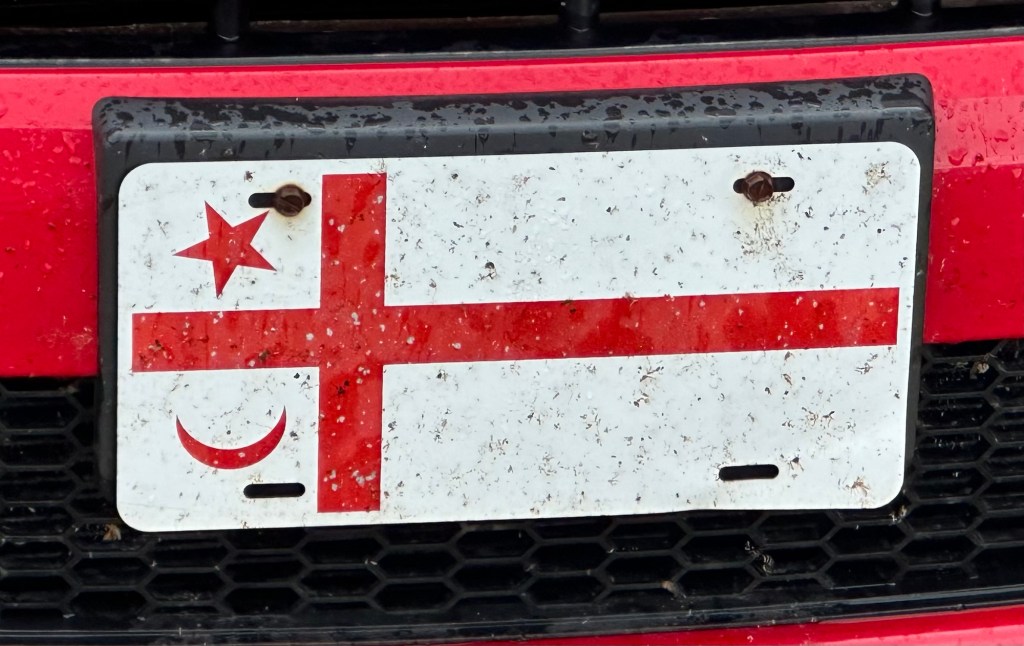
Jack also showed me the Mi’kmaw number plate of his Fiat 500. Meanwhile many little steps have been taken to preserve the national identity of First Nation Bands.
Jacks outlook for his band was overall rather positive:
– They had recovered from 50 to 600 people in 30 years.
– They had won their self confidence back and worked as entrepreneurs.
– The language and the traditions were taught in special schools to preserve it.
– More and more went to University without loosing their cultural identity.
Around 10 am Jack and I sad goodbye with a big hug and I ventured off.
It had stopped raining for a little while but then the rain came back and staid pretty much all day. But it was warm and I knew that I would sleep in a dry place with a washing machine – so all was good.
The most challenging part was crossing the causeway (Damm) in the rain that connects Cape Breton to the mainland. It had just two lanes and no shoulder and all the traffic in and out of Cape Breton had to go across it.
It was scary and very wet because I got showered by overtaking cars driving through deep puddles.
I had an early lunch at a burger place to regroup and hoped that the rain would stop – but it did not.
The rest of the tour was less eventful. I took an old highway that was actually quite peaceful to cycle. Also, it was Labor Day in Canada which was another reason for the little traffic.
I stumbled upon this sign near the road. Later I learned from Jamie that there are many Germans here who bought cheap properties in the back country which are now converted into properties and little settlements.
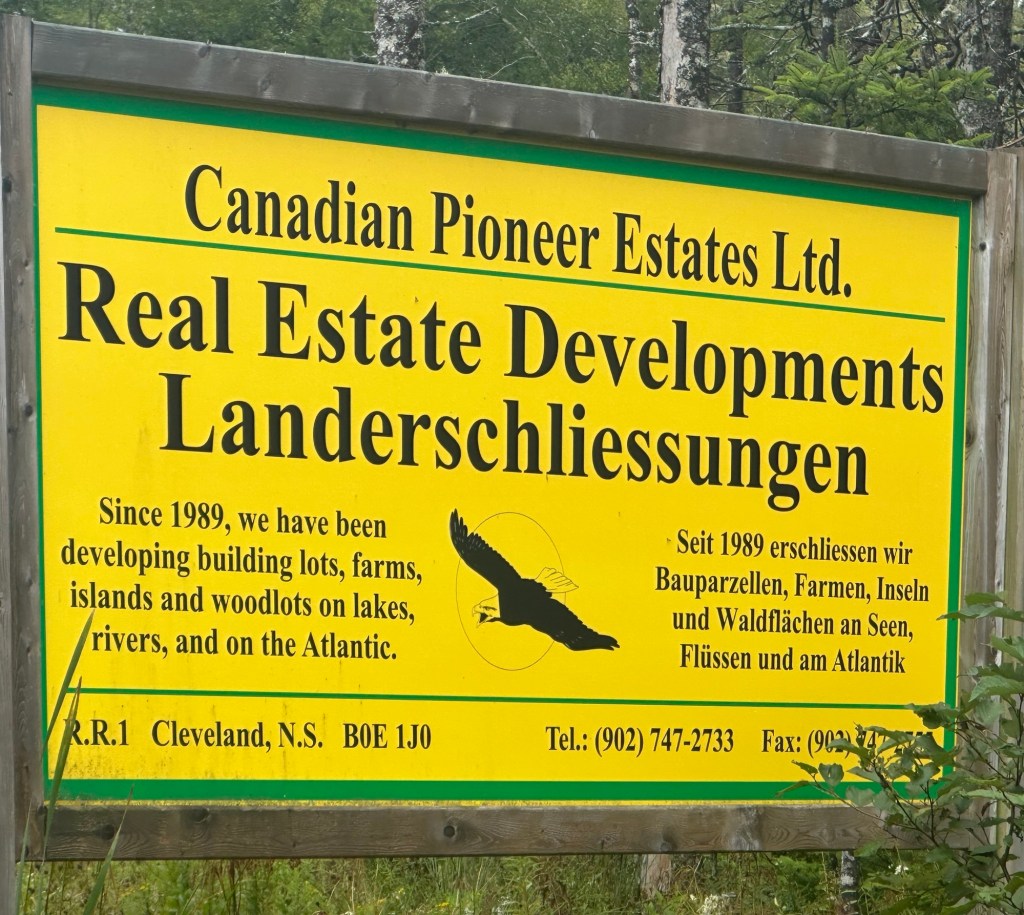
Can you imagine retiring in a remote area in Canada and all your neighbors were also Germans? I would find that a very disturbing thought.
Around 4pm, I arrived at Jamie’s place. The tour across Isle Madame had been quite scenic and his beautiful home was on a hill directly by the sea.
Jamie was a friend of Jonathan who I staid with in Montreal.
He had studied Information Systems in Halifax and was also in the SAP space for 20 years.
He had worked together with Jonathan since many years.
Five years ago, he started his own company focusing on SAP development and has now 15 associates.
He tried to hire people from his area which was quite remote. The nearest universities were Antigonish and Halifax.
Also his wife Miranda works in the company and takes care of the finances.
Jamie spend a lot of time training and coaching his people. There was also a social mission behind his work.
One of his associates even was a former fisherman from the South Shore of Nova Scotia. It took him two years to learn how to code in SAP and now he was on his first assignment. What a great story!
I had a warm bath, washed my clothes and dried my shoes.
We ate dinner together with Miranda’s two nephews Isaac and Fletcher. They lived in Port Hastings directly by the causeway and had seen me already a couple of hours ago cycling through the rain when their mum and dad drove them over to Arichat.
We chatted a lot about different topics one of them being the Arcadians who live in this area. More about this at a later point.
Around 8pm I excused myself and went to bed early.
Only 140km left to go to the ferry.
Thanks for this very interesting information about the First Nations people, Karsten. Congrats to you for this so individual trip, I look forward to hear from you how you kept motivation …
Have a good return, best regards from the Bodensee Christian