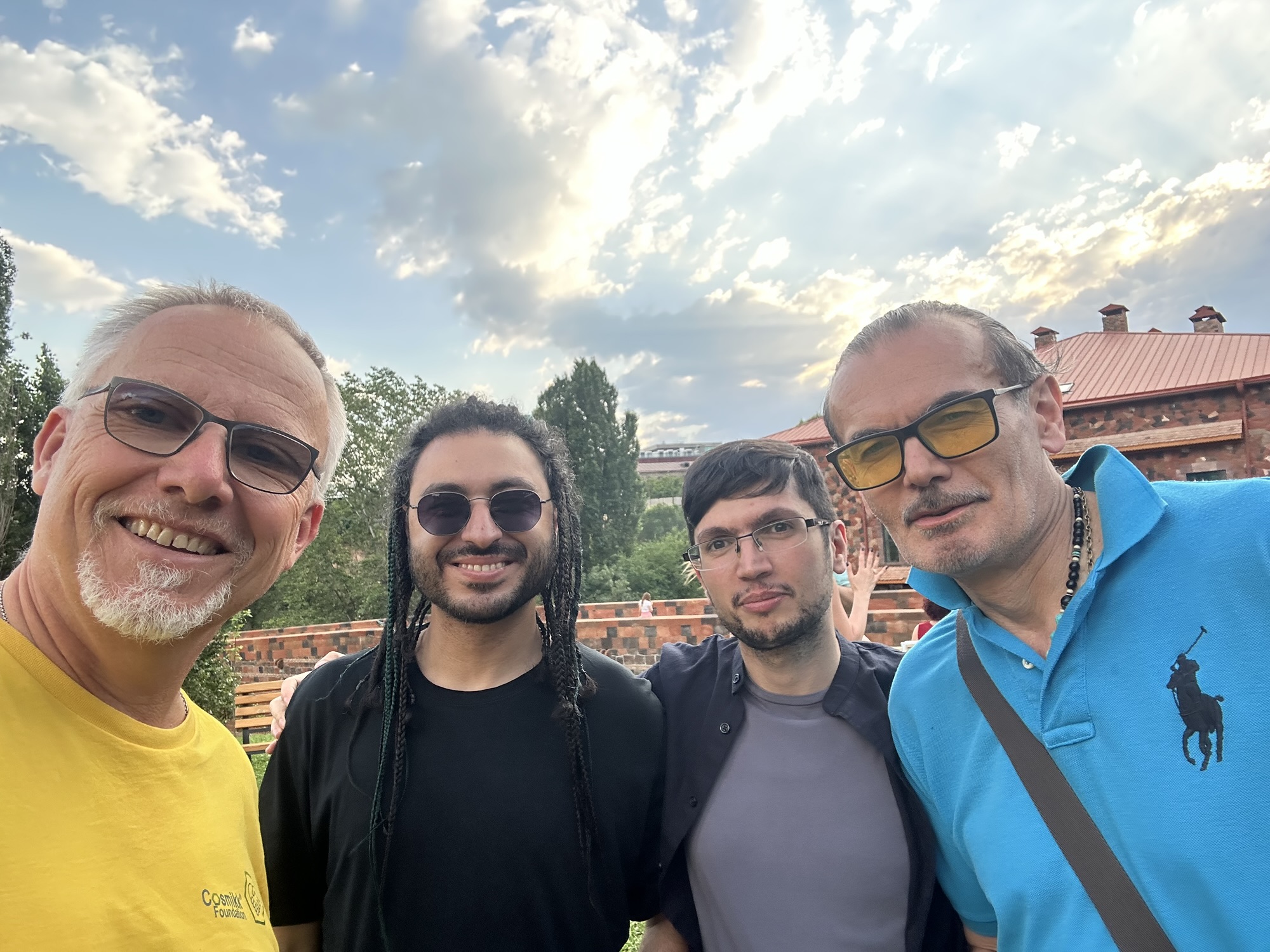


After a delicious breakfast prepared by the host of my little guesthouse, I drove to the Tsitsernakaberd Genocide Memorial and Museum on the other side of town.
What I saw there was shocking and deeply depressing. The thing that struck me most was this: the Armenian Genocide appeared to follow the same blueprint as what happened later to the Jews in Nazi Germany. It started with nationalist sentiment. That sentiment was then amplified — by the media, by laws, by political decisions, by the deliberate tolerance of individual acts of violence. And it ended in mass slaughter – oftentimes in cities I had cycled through like Bursa or Erzurum.
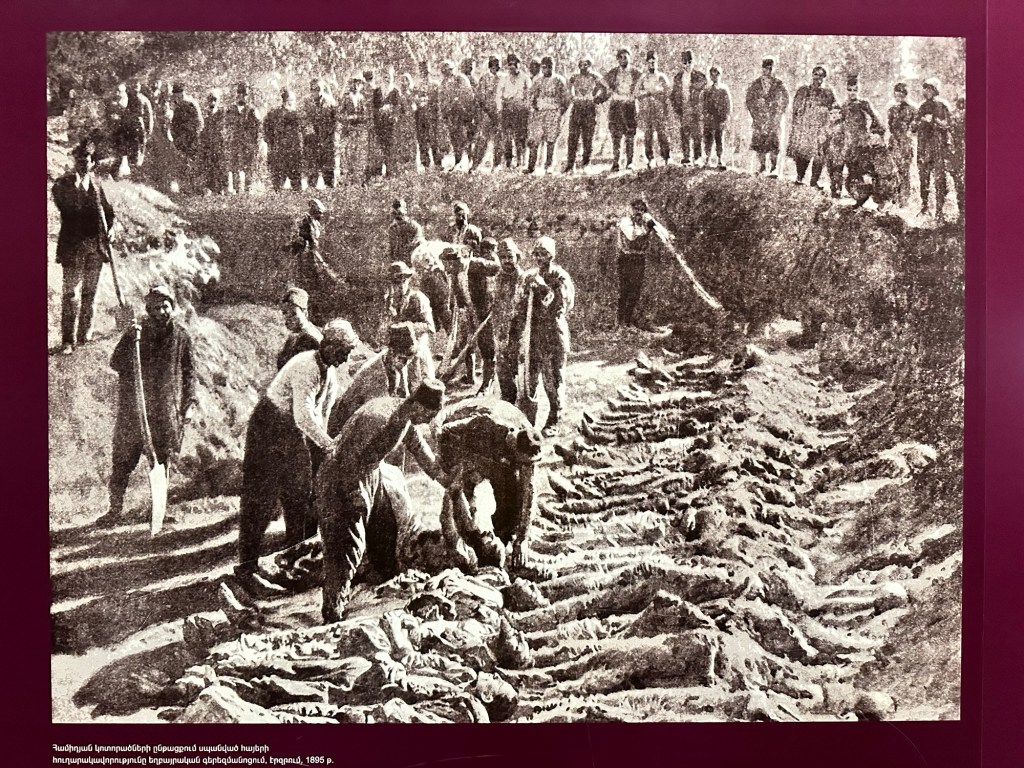
Many of the photographs inside could easily have been mistaken for images from the Holocaust. But the Armenian Genocide happened during World War One. Germany was an ally and knew about it. Germany did not intervene. Other priorities came first. Alliances. The war itself. When the Holocaust came two decades later, the world had already seen what this pattern looked like. It had not learned enough.
Doctors played a direct role also in the Armenian Genocide. Mehmed Reşid was a physician and governor of the Diyarbekir province during 1915. When later asked how he, as a doctor, could have done what he did, he answered: “My Turkishness prevailed over my profession. The Armenians had become hazardous microbes in the body of this country. Well, isn’t it a doctor’s duty to kill microbes?” He was not alone. Leading figures of the movement that ran the genocide killing programme were physicians.
That quote got to me. A man trained to save lives, concluding that an entire people were microbes to be eliminated. It is not a moment of madness. It is the end point of a long process. Someone decided the Armenians did not belong. Then that they were not fully human. Then that removing them was not murder but medicine. How much hatred has to be built into a person, over how many years, for that logic to feel real? I do not know. I stood at the memorial and I still do not know.
The map shows locations of mass killings and concentration camps in Turkey.
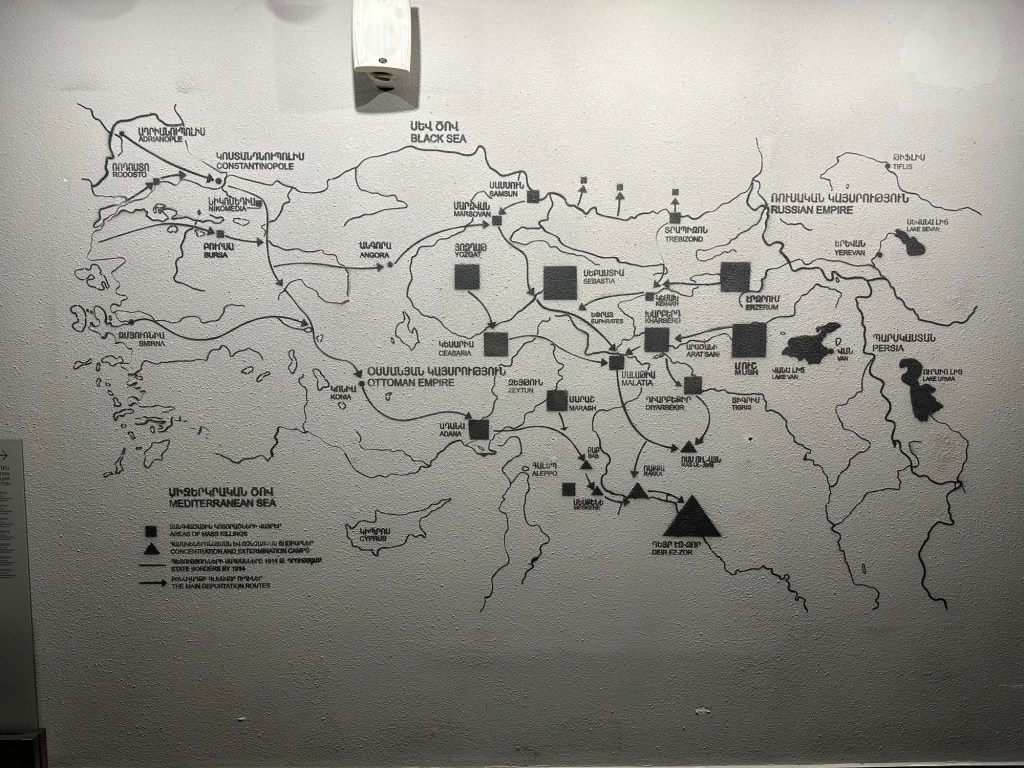
Claude Overview: Between 1915 and 1923, the Ottoman government systematically killed an estimated 1.2 million Armenians through mass executions, forced deportations, and death marches into the Syrian desert. The killings were organised by the ruling Committee of Union and Progress, also known as the Young Turks, who saw the Armenian population as a threat to the Ottoman state. Survivors were scattered across the world, forming the Armenian diaspora that exists to this day. Turkey has never officially recognised the events as genocide, which remains a source of deep pain for Armenians everywhere. More than 30 countries, including France, Germany, and the United States, have formally recognised the Armenian Genocide.
From the museum you had a wonderful outlook on Mount Ararat.

I drove back into town and returned to my guesthouse. I needed to digest what I just saw. I slept for a while.
Around lunchtime, Martin, a cousin of Galina, picked me up. Galina is a friend of my wife and is originally from Yerevan. She had been organising connections for me during my drive the day before.

Martin gave me a two-hour city tour. I was very impressed. We were not just covering the obvious sights. We took tiny roads that would barely fit one car. We visited old churches, large public spaces, museums, opera houses, parks, monuments, viewpoints. By the end of it I had a genuinely good overview of Yerevan.
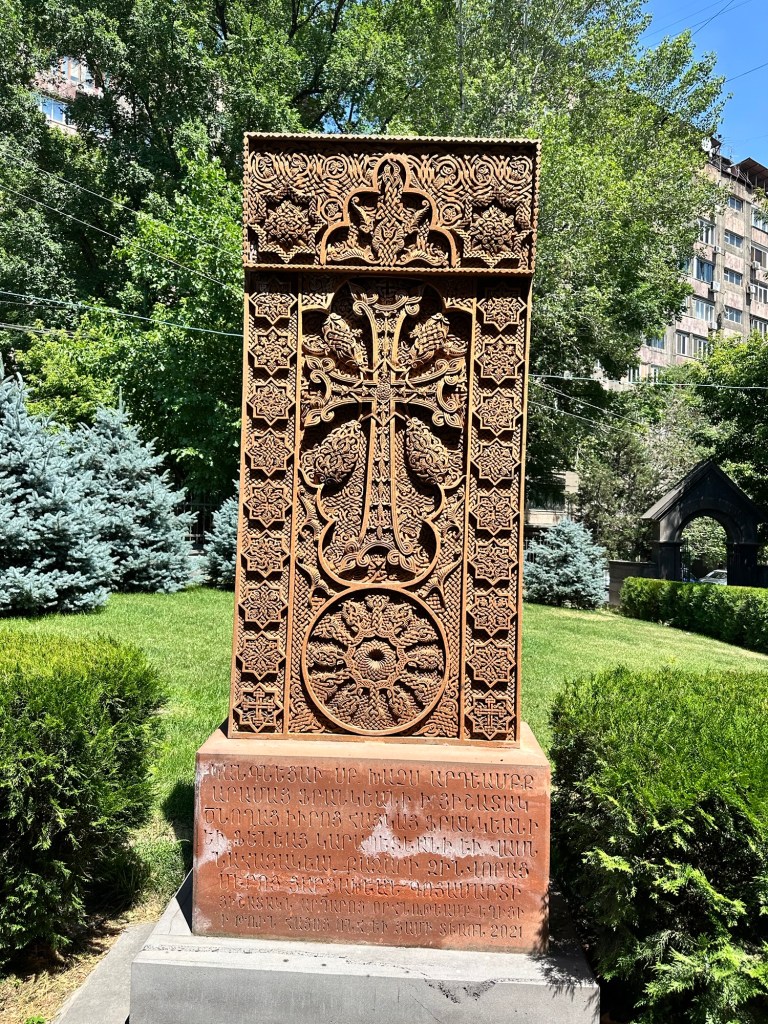

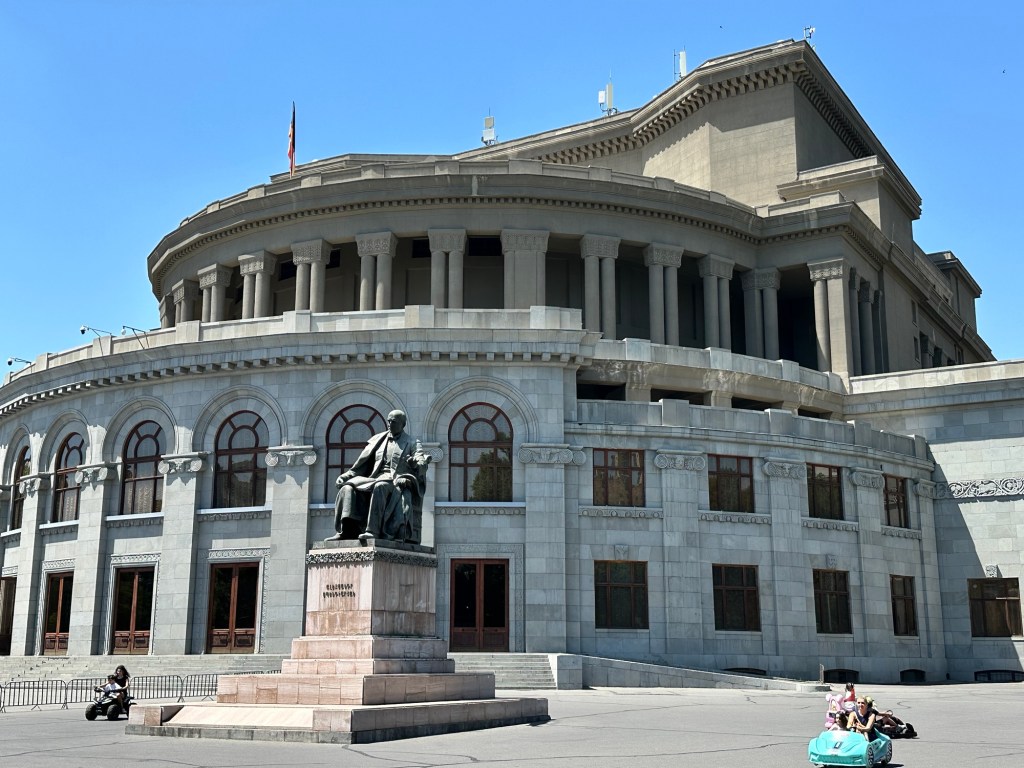

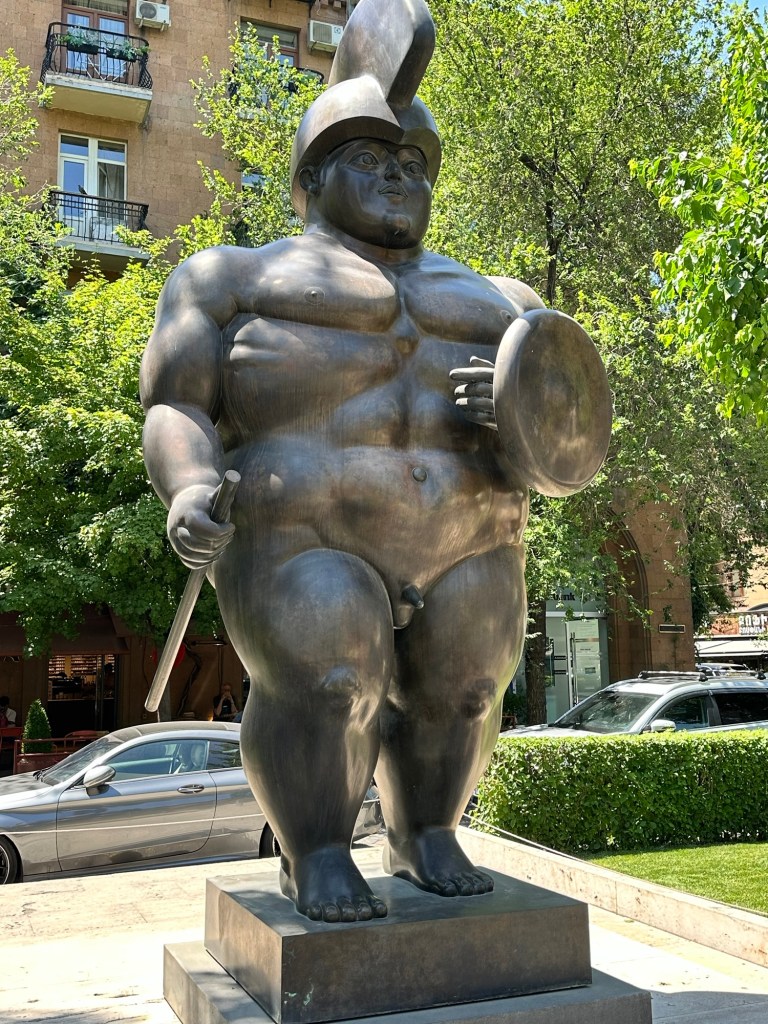
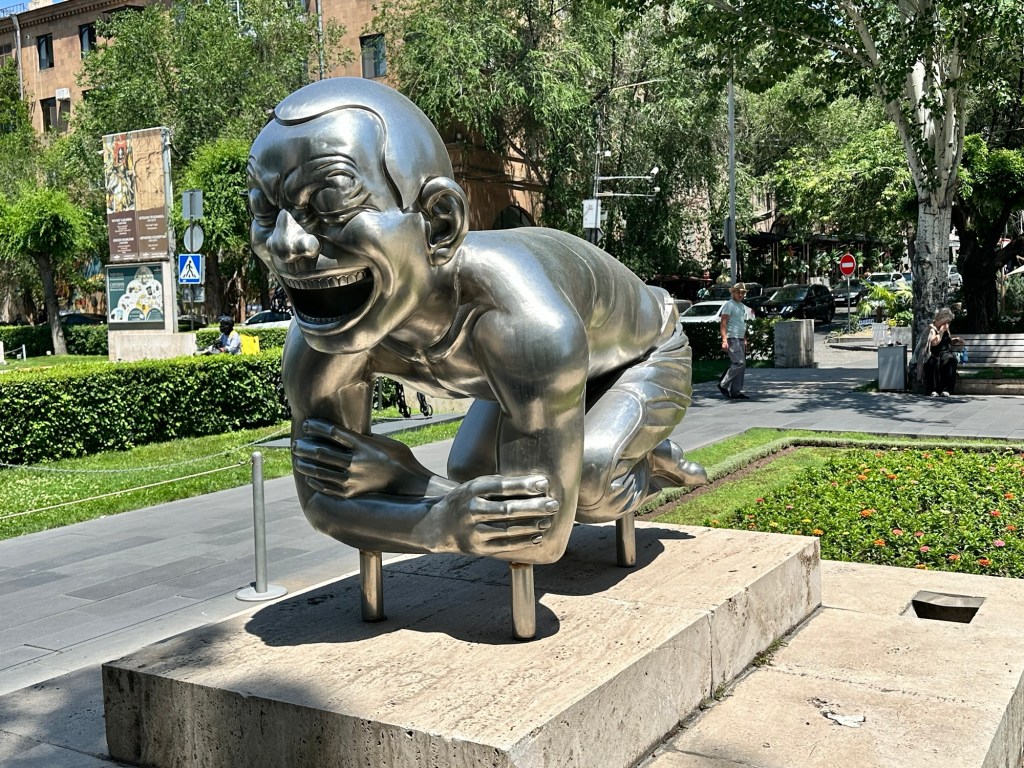
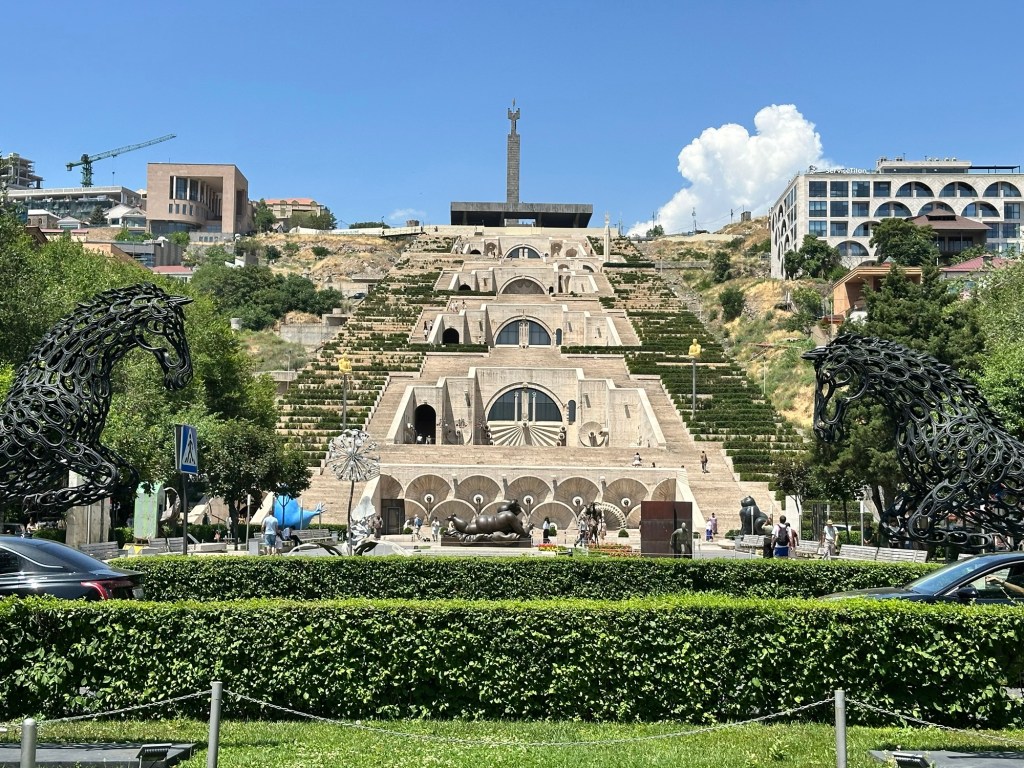
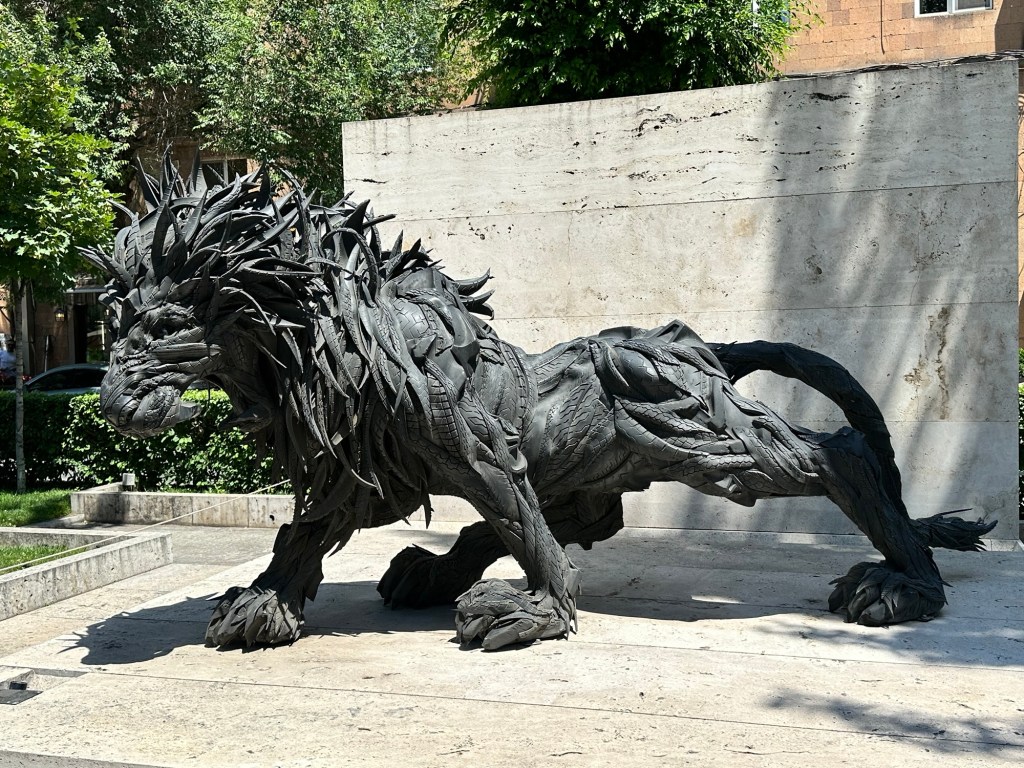
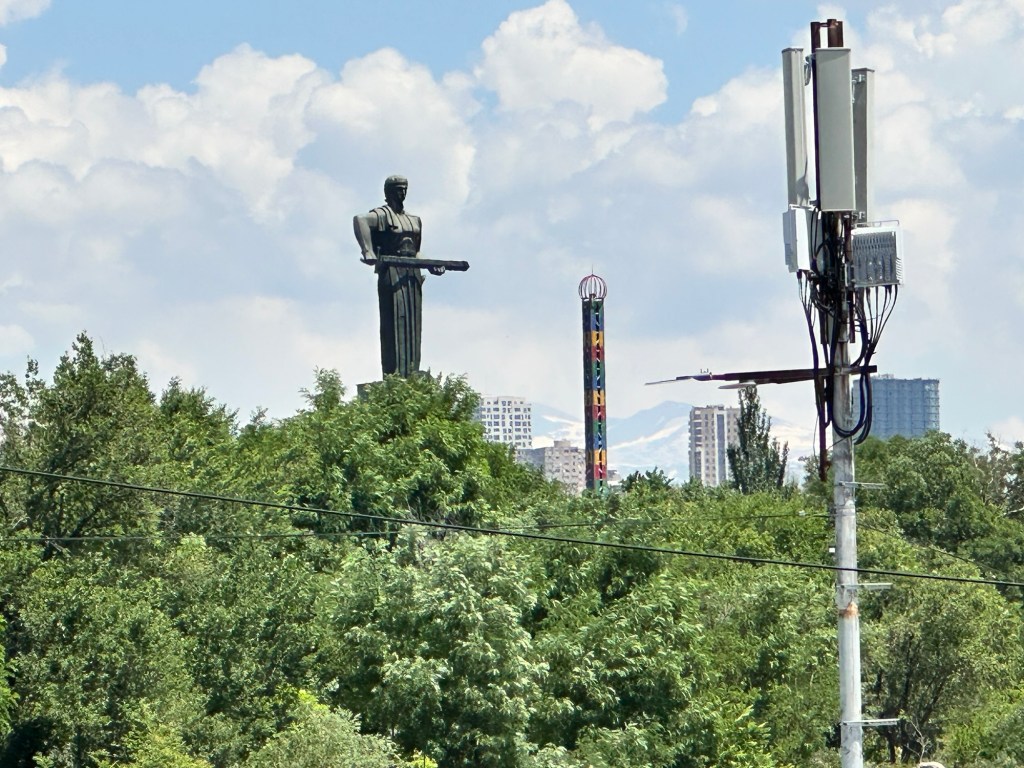
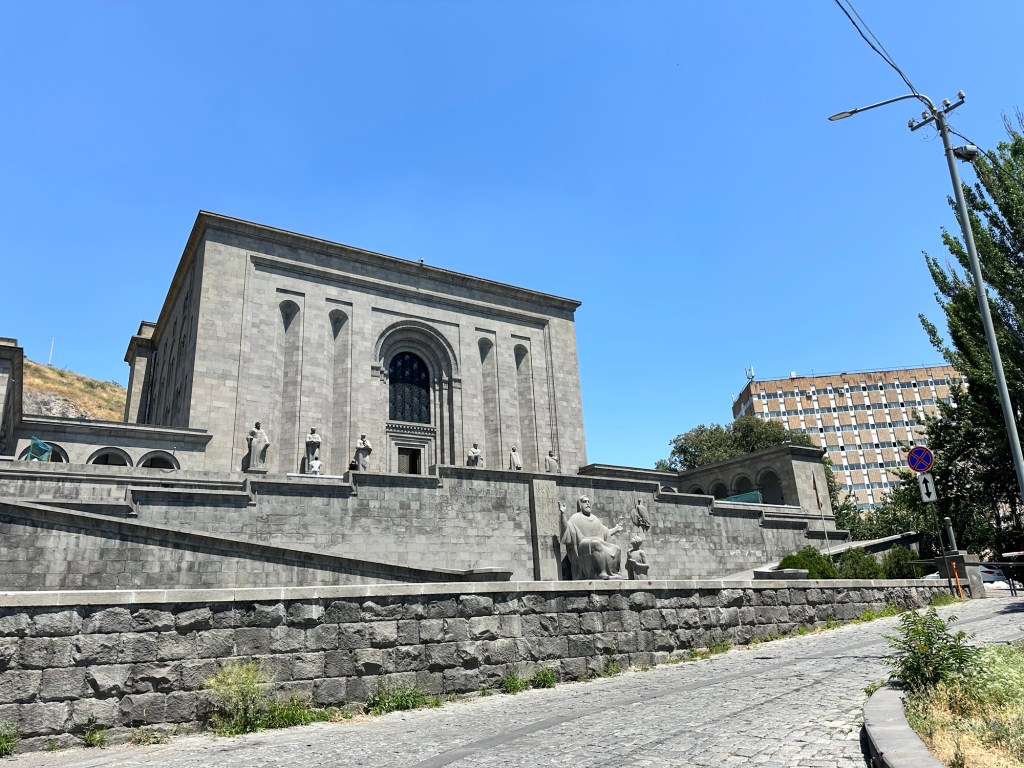
Driving through the city, I remembered a joke format from the Soviet era: Questions to Radio Yerevan. I had grown up with these jokes in Germany.
Claude Overview: Radio Yerevan jokes were a popular form of political humour in the Soviet Union. The format was always the same. A listener sends in a question to Radio Yerevan, the Armenian state broadcaster. Radio Yerevan answers. But the answer is never a straight answer. It twists the question, exposes an absurdity, or turns the official truth upside down. A typical example: “Is it true that there are no homeless people in the Soviet Union?” Radio Yerevan answers: “In principle, yes. But we recommend not trying to find out for yourself.” The jokes spread across the entire Eastern Bloc. They were a way of saying out loud what everyone already knew, while still keeping a safe distance from the truth.
I had never thought that one day I would actually be here. Standing in the city that gave those jokes their name.
He dropped me at the ACT College in the afternoon.
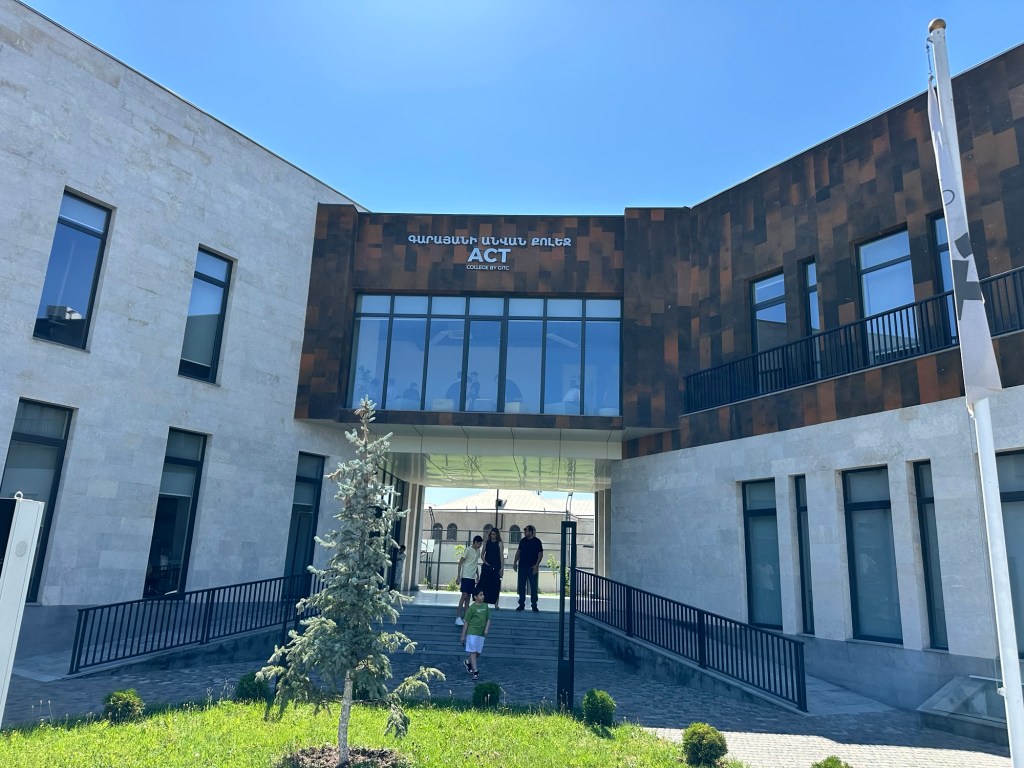
The ACT College was founded by Amalya, who I had met for dinner the night before. Edgar, the head of faculty, was also there.
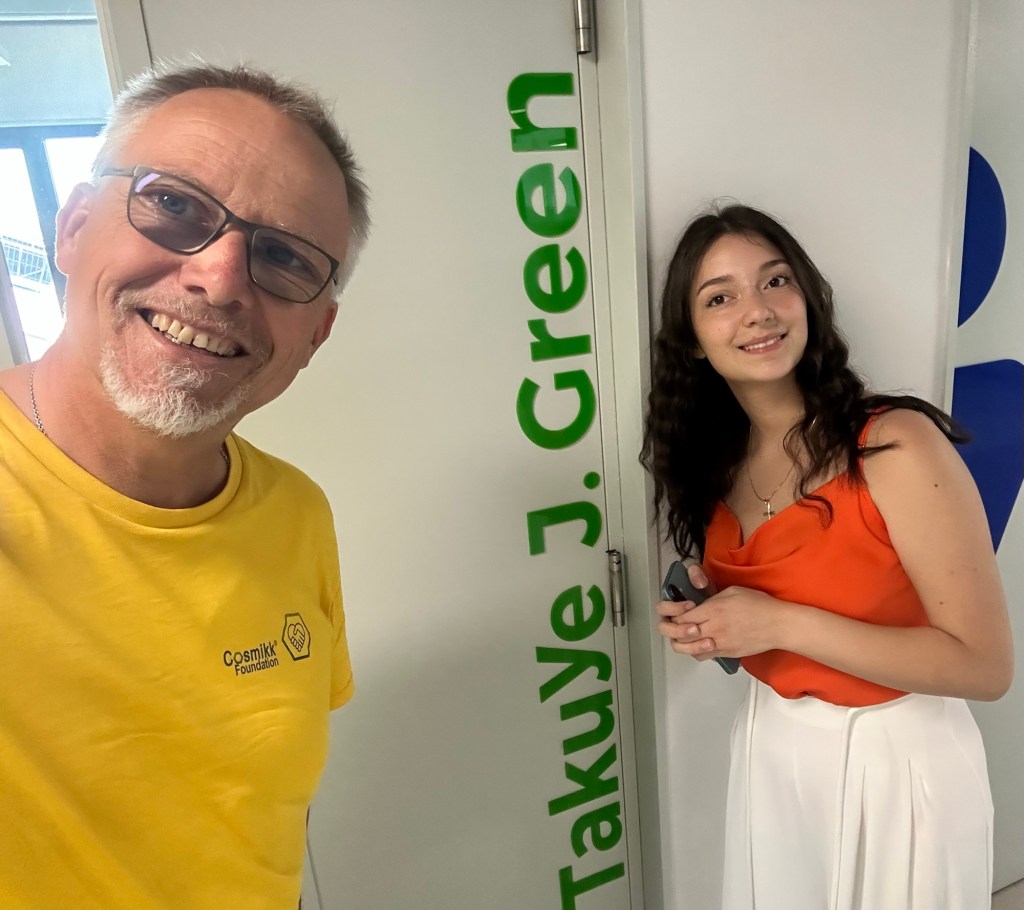
Hasmik, a 16-year-old student with the best grades, showed me around the campus. The school takes students between 15 and 18 years old. These are the brightest of the brightest. Many of them are on scholarships. My friend Kathy in Chicago, who had connected me to Amalya in the first place, is one of the donors. One class name is dedicated to her mother.
She had also suggested that I offer some courses at the college. Walking around the campus, I was not hating the idea. Everything is digital. Everything runs through a single app — scheduling, coursework, communication. The curriculum combines standard academic subjects with artificial intelligence, digital manufacturing, 3D printing, CNC machining, and vocational training. It is very interdisciplinary. Admission is competitive. While we were there, nervous parents sat in the cafeteria with their kids, waiting for acceptance results to come through.
After the tour, Edgar came to find me. Amalya joined shortly after. I was also introduced to Al, a successful entrepreneur of Armenian descent who had come from the United States. He was considering supporting the school as a potential donor.
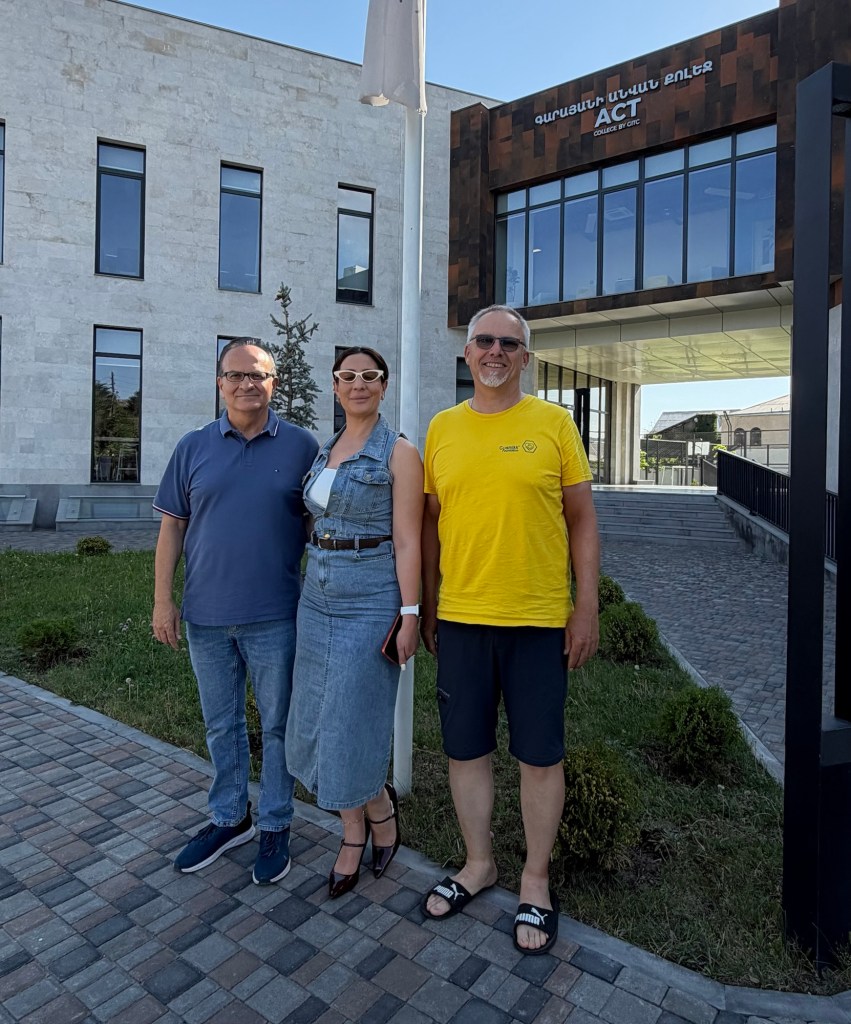
Amalya then gave me a ride back into the centre of Yerevan.
That evening I met Samvuel at an open-air exhibition at the Red Bridge Hotel.
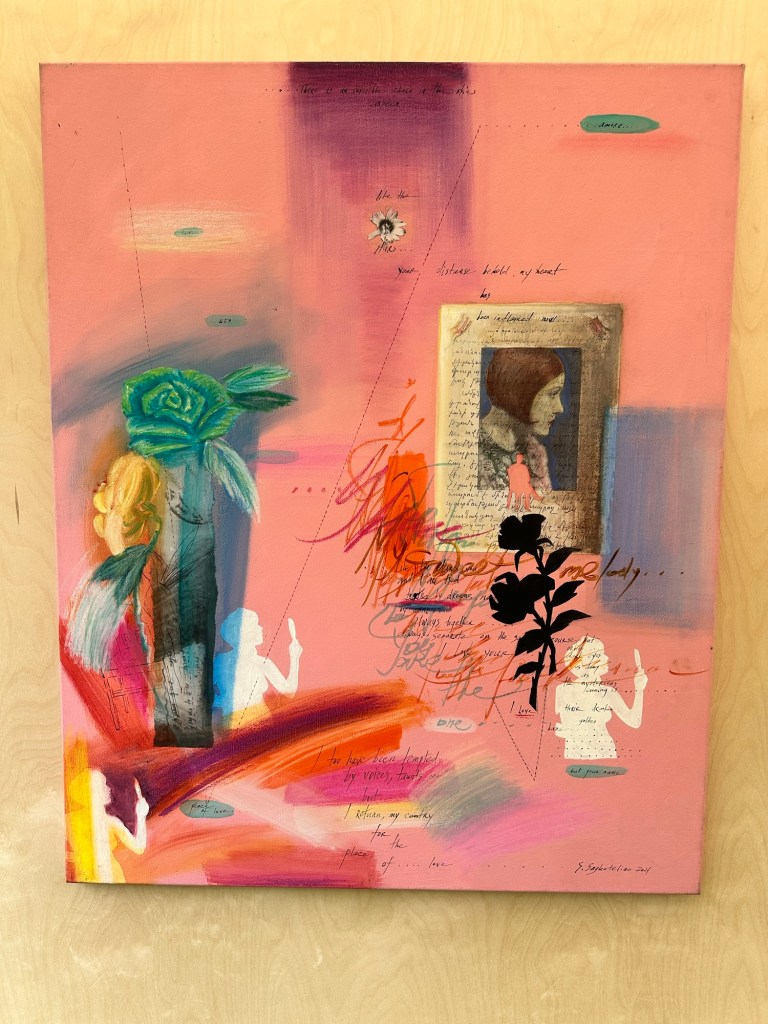
Samvuel is a long-time friend of Galina. He spent his career as an architect and is now retired. But he remains very active as an artist. It was a closing ceremony for a group show featuring paintings, sculptures, installations, and digital art. There were artists from Iran, from Lebanon, from Armenia. The conversations were interesting.
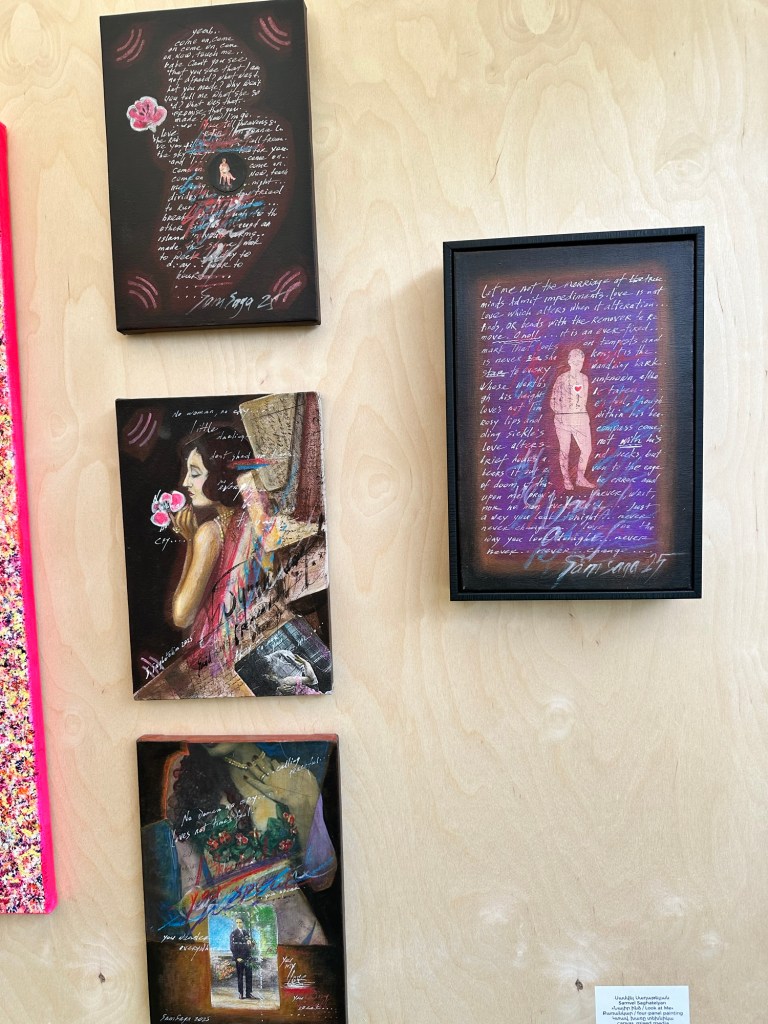

I arrived late because the traffic had been terrible. More than one hour for 6 kilometres. Even the taxi driver could not do better.
For dinner, Samvuel recommended some traditional Armenian dishes. He suggested lamb. It came with a lot of bones and fat. It was not for me. I tried it, but my taste buds were not convinced. Samvuel was a little disappointed. At least I had tried. There was tabbouleh as well, and I was very happy with that.
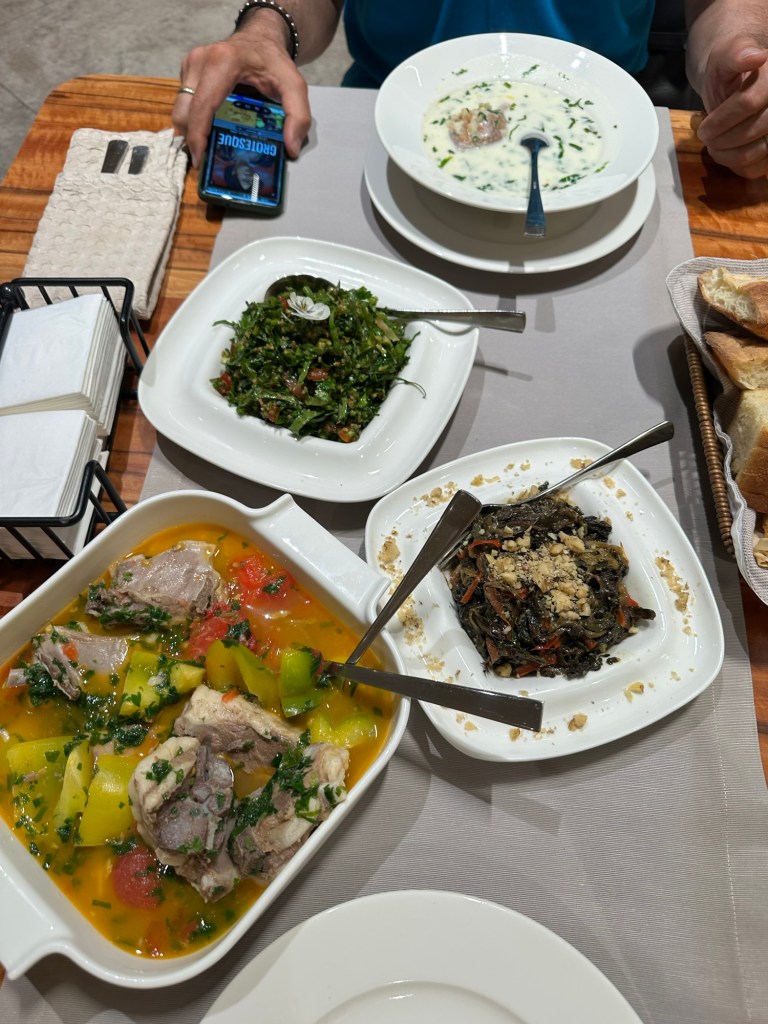
We talked about art, about life, about Samvuel’s own story. He had lived in Los Angeles for a while, run an art gallery there, then came back to Armenia. Art has stayed with him ever since.
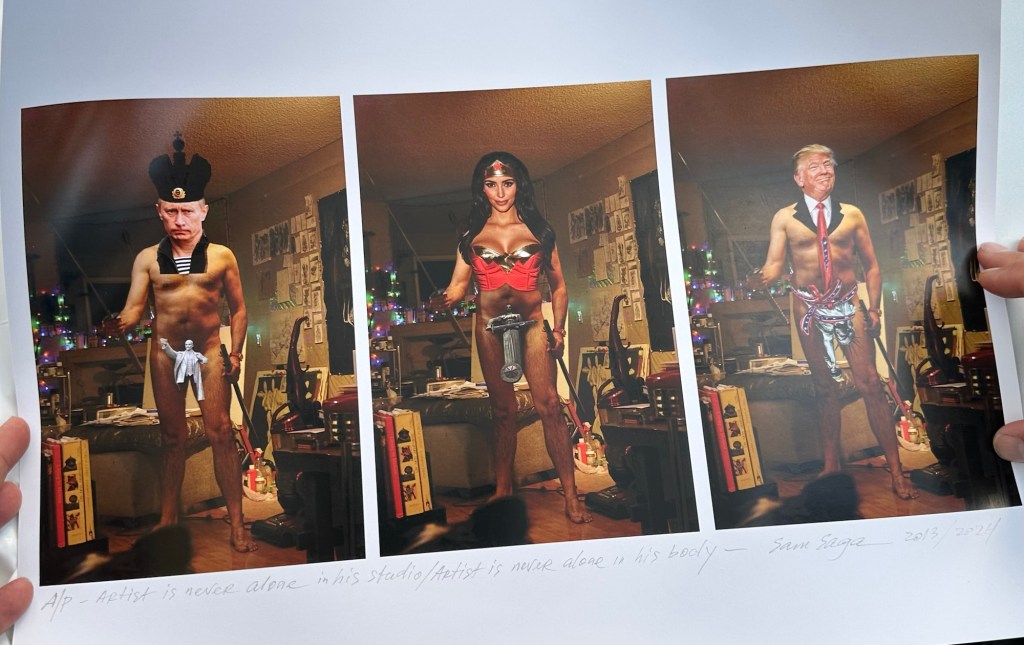
Before the evening ended, he organised a taxi for me. And before I left, he gave me a gift. One of his prints. A political piece of work labeled „The artist is never alone in his own body“. I felt genuinely honoured to receive it.
Back at the guesthouse, I sat for a little while and let the impressions of the day sink in. Then I went to bed quickly.
Learnings of the day:
Visiting the genocide memorial does something to you. It is not just sadness. It is incomprehension. Violence in war I can follow, at least as a logic. You are attacked. You fight back. It costs you everything inside. But you had a reason. What happened to the Armenians and later the Jews had a different starting point entirely. Someone decided they did not belong. Then someone decided they were not fully human. Then that idea was used to move people toward mass murder. One and a half million people. I left the memorial no closer to understanding how that is possible.