

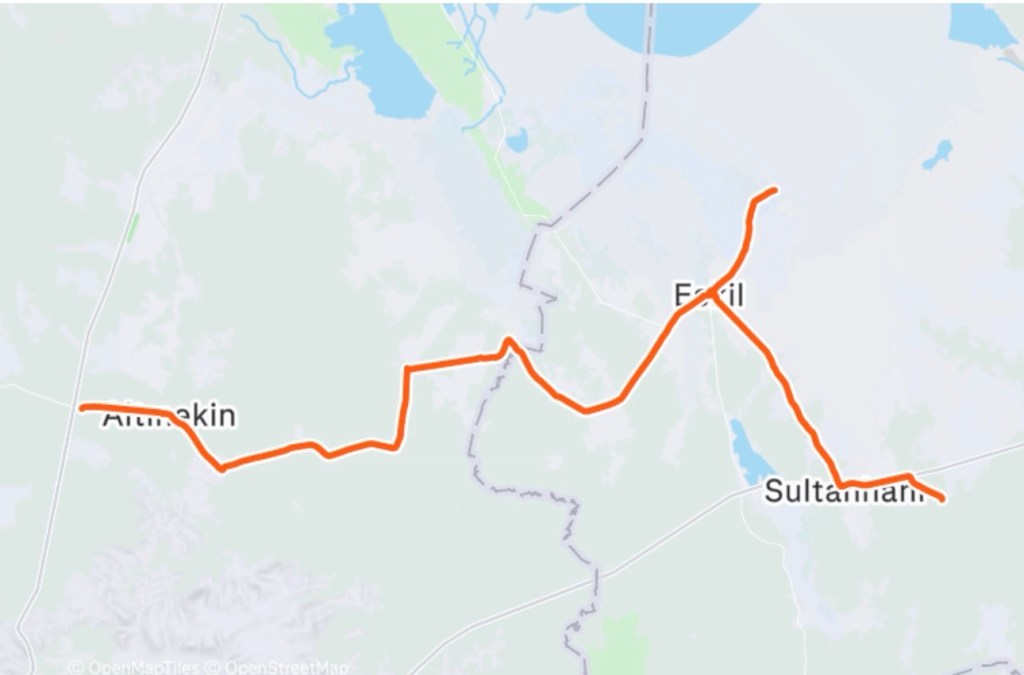
Distance: 131km
Elevation: 269m
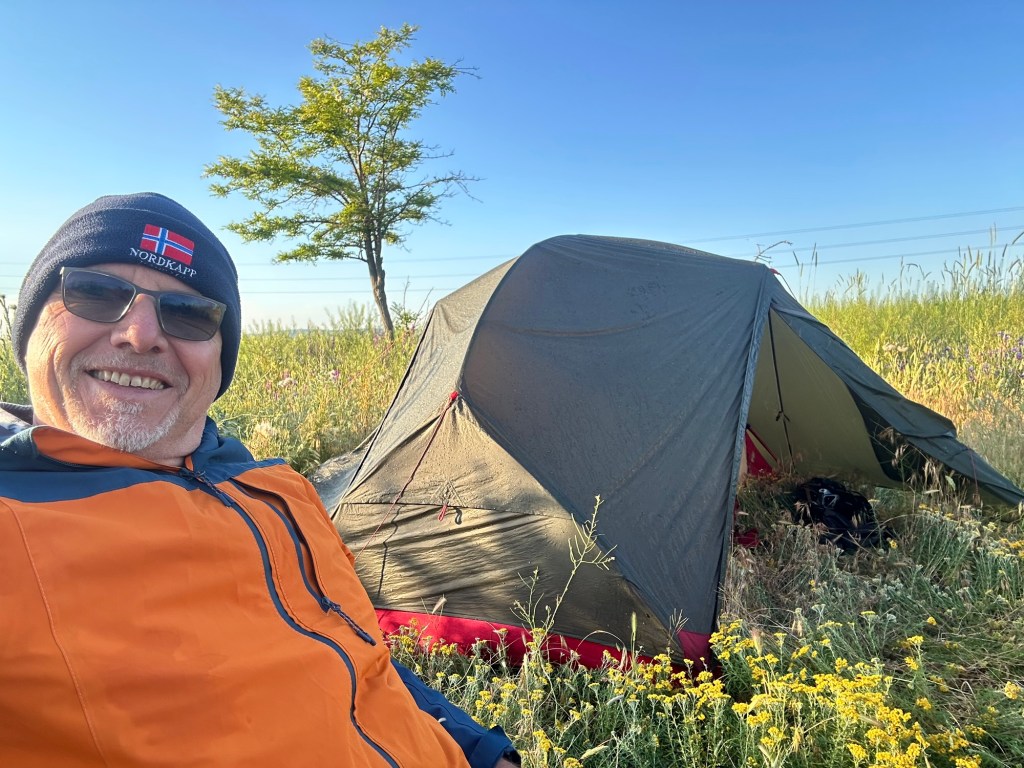
The day started with a relaxed breakfast in the sun. There was nobody around. Hidden in a small patch of land with no one in sight, it felt like a private kingdom. I took my time before packing up and getting back on the road.
The goal was Tuz Golu, one of the largest salt lakes in the world at over 1,600 square kilometers. The official entrance on the north-east would have meant a full day of detour. Whether I could approach it from the south was unclear. The information I had found was contradictory, so I kept that open and focused on the route.
My strategy for the day was to stop often and plan around infrastructure rather than the direct line. The area does not have much, so the route zigzagged to pass shops and places to eat. The first gas station had nothing to sell other than gas but the attendant gave me two bottles of water anyway.
Around noon I reached a small village and found a place serving baked beans and stuffed eggplant.
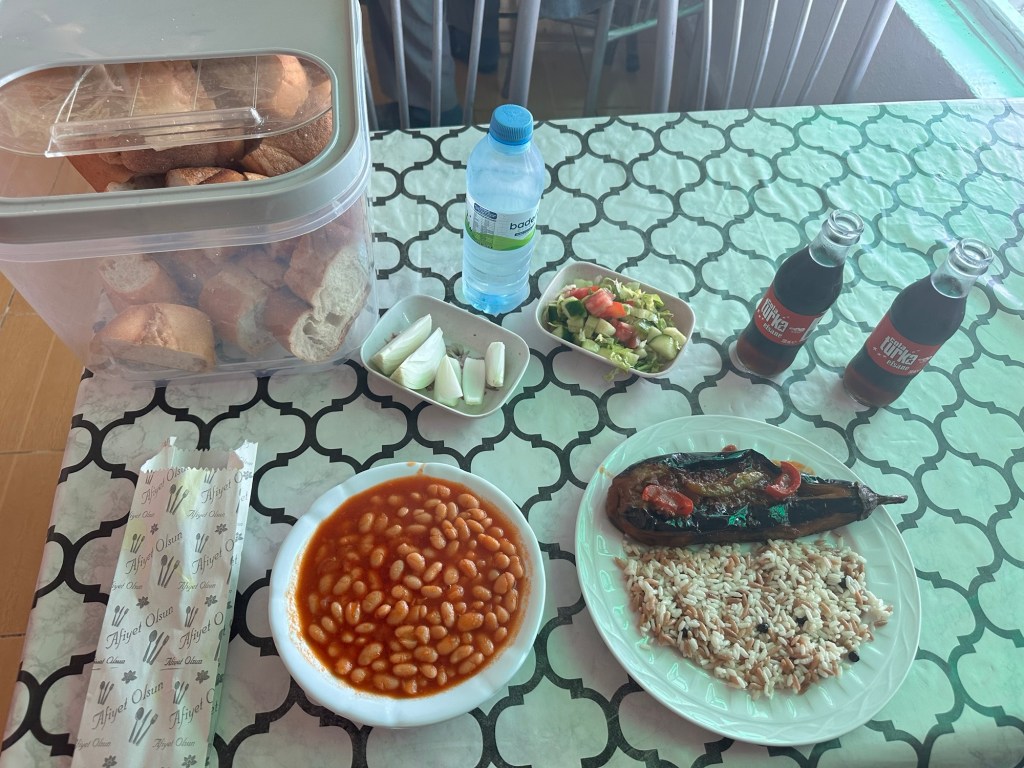
Mohammed, one of the two attendants, was the son-in-law of the owner. He was originally from Antalya and had come to help out and spend time with the family of his wife.
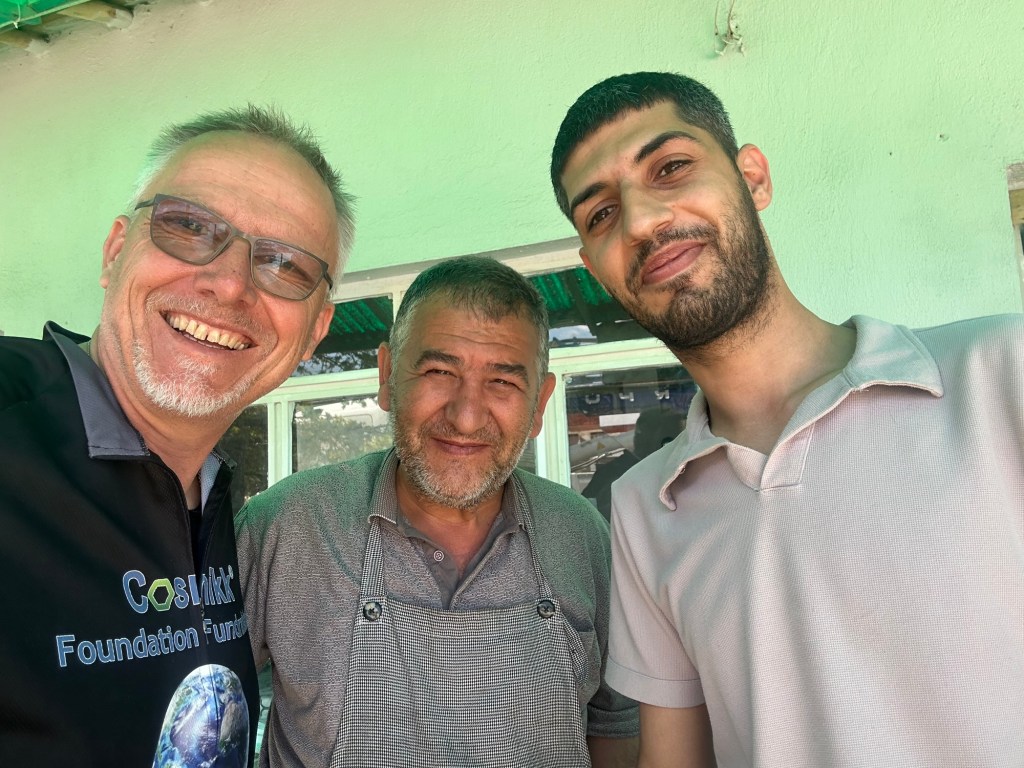
By lunchtime the place was packed with workers coming in from the fields. Everyone smoked. At some point you could barely see across the room. People observed me all the time.
Yesterday, a few had actually taken out their phones and filmed me cycling by. Foreigners do not come through this area. It is not a tourist route at all.
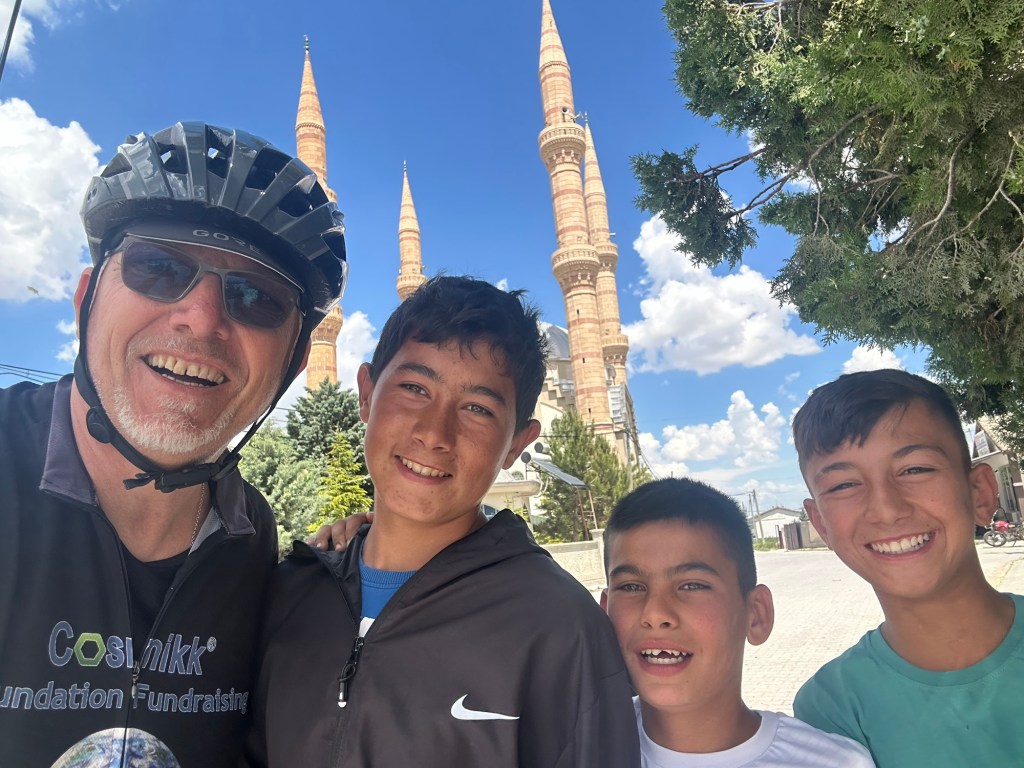
Later in the afternoon I stopped to photograph a mosque. A group of kids tracked me down and wanted a picture. They were eight, nine, ten years old and not in school. Some were on scooters. Some were driving cars. I still wonder how they reached the pedals.
Shortly after, a group of adults at an ice cream shop pulled me in. I ended up with a cone in one hand and Google Translate in the other. They had questions, many of them. I asked why the kids were not in school. One man pointed to a boy and said he should be in school for eight years but had been for only one because he did not want to go. He preferred to work. Then the man asked whether there was work for them in Germany. I said that without language skills, probably not. And without school, there were no language skills. That was the catch. It was a good conversation, but it cost me another 45 minutes and I was running late.

I did the final push to Tuz Golu. By then the heat had become serious and the landscape had turned to desert. Everything was beige and stone. Almost no plants left.
In Eskil, the last village before the lake, I took a final break and then rode out to the shoreline. The route was easier than expected. Nothing to worry about.
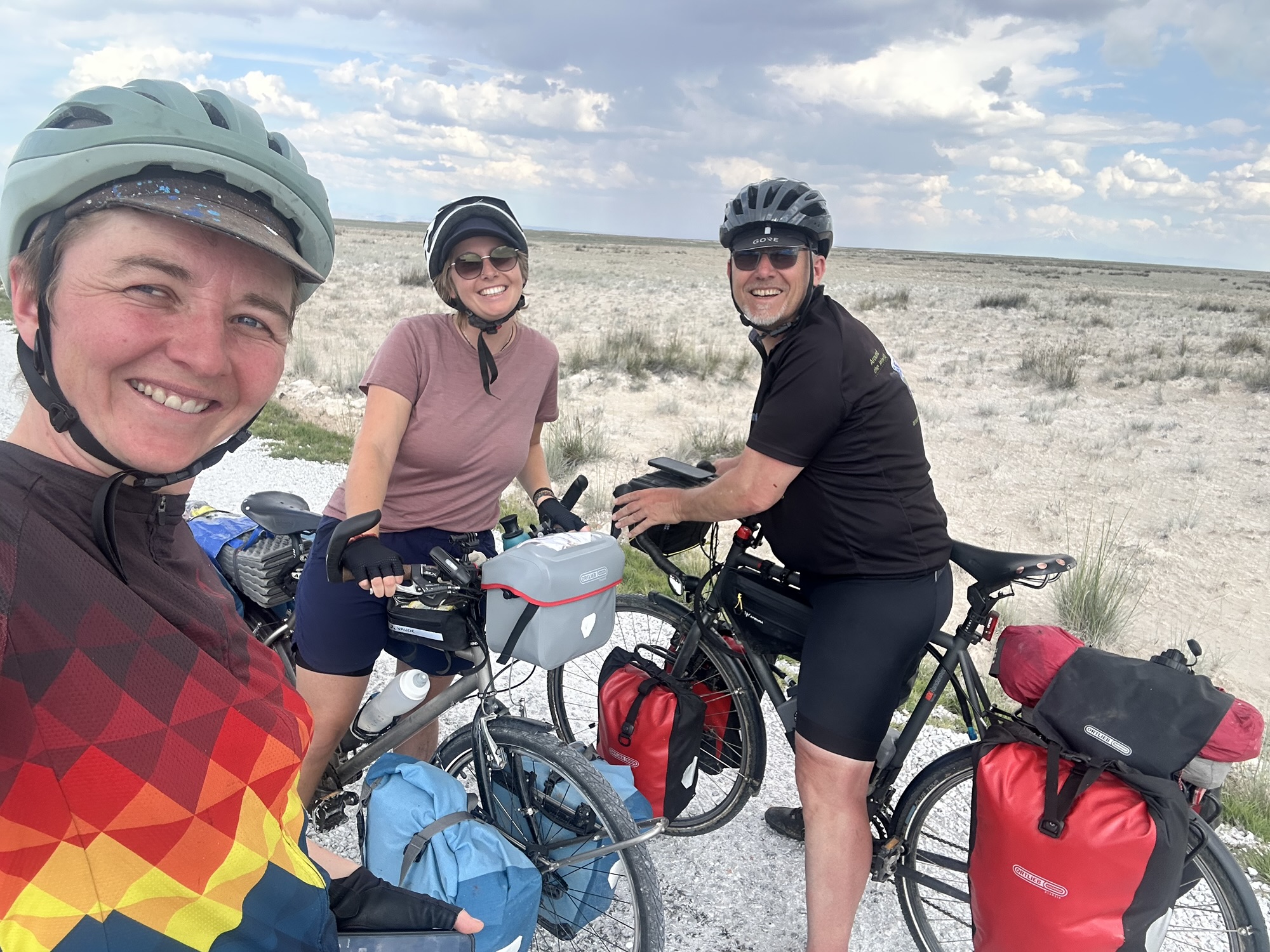
Two kilometers before the lake I spotted two other cyclists. Cecile and Tanja from St. Gallen in Switzerland. They were heading to China and had already covered several thousand kilometers through the Balkans and Greece. We compared notes and discovered we were already in the same WhatsApp group for cyclists on the Silk Road.
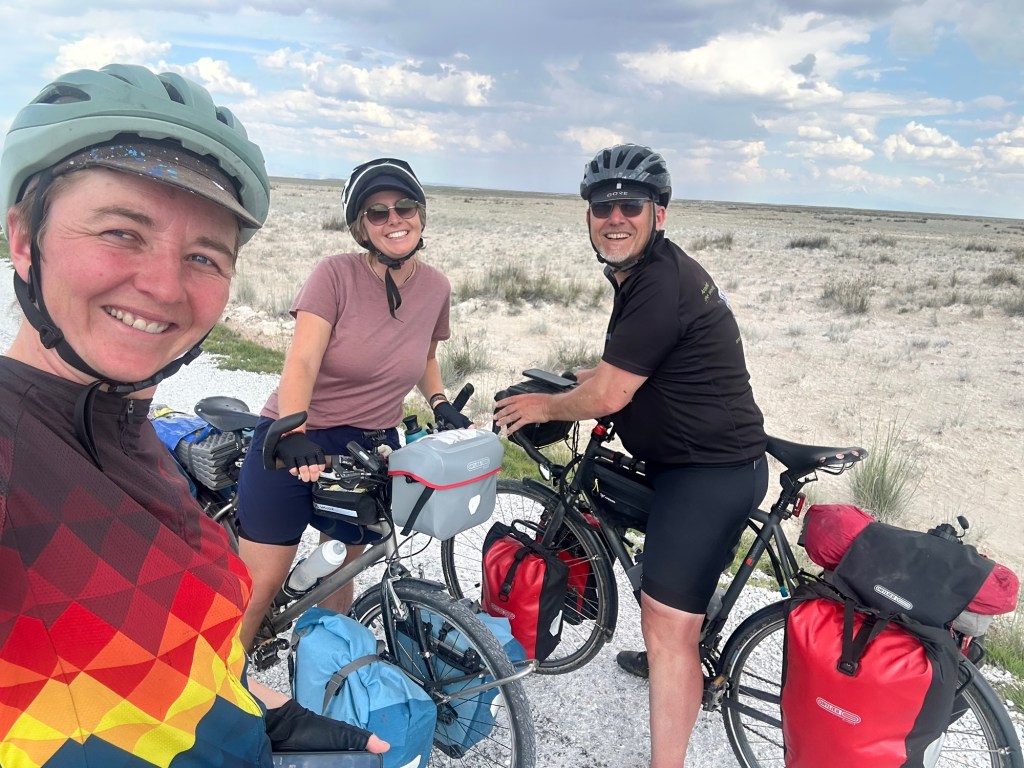
They had the same unsolved problem I had: how to get from Tbilisi in Georgia to Baku in Azerbaijan. We exchanged numbers and agreed to stay in touch and share what we each find out along the way.
Another cyclist in the group had recommended an app called Rolling Around for finding fellow cyclists on the road. I will install it on my rest day tomorrow.
The detour to Tuz Gölü was worth it. A vast white surface stretching to the horizon, what had once been water and had since evaporated, leaving behind a thick crust of salt. Not entirely hard. Your wheels leave a mark. You could see the tracks of cars that had driven out, and in a few places, the spots where they had broken through and had to be towed out. With my weight that was not a concern. I cycled out a few kilometers onto the lake and then I called my wife. I wanted to share the view with her. She picked up, and that made it better.
After a while the black flies found me and started working on my skin. I sprayed myself down and turned back. A thunderstorm was also building on the horizon. At the edge of the lake, where the salt crust meets the soil, I came across a group of French overlanders with their four-by-fours. We talked for a bit in French. My French was gone. The brain had no capacity left after a day of Turkish words. It was a little embarrassing. I wished them well and rode on to Eskil to fill up on water for the night.
I ended up in a candy shop run by a young man of about twenty. He asked where I was from, what I did, how many kilometers I cycled per day. Genuinely curious and warm. When I went to pay for two soft drinks, two candy bars, and water for my bladders, he waved it away and gave it all to me as a gift.
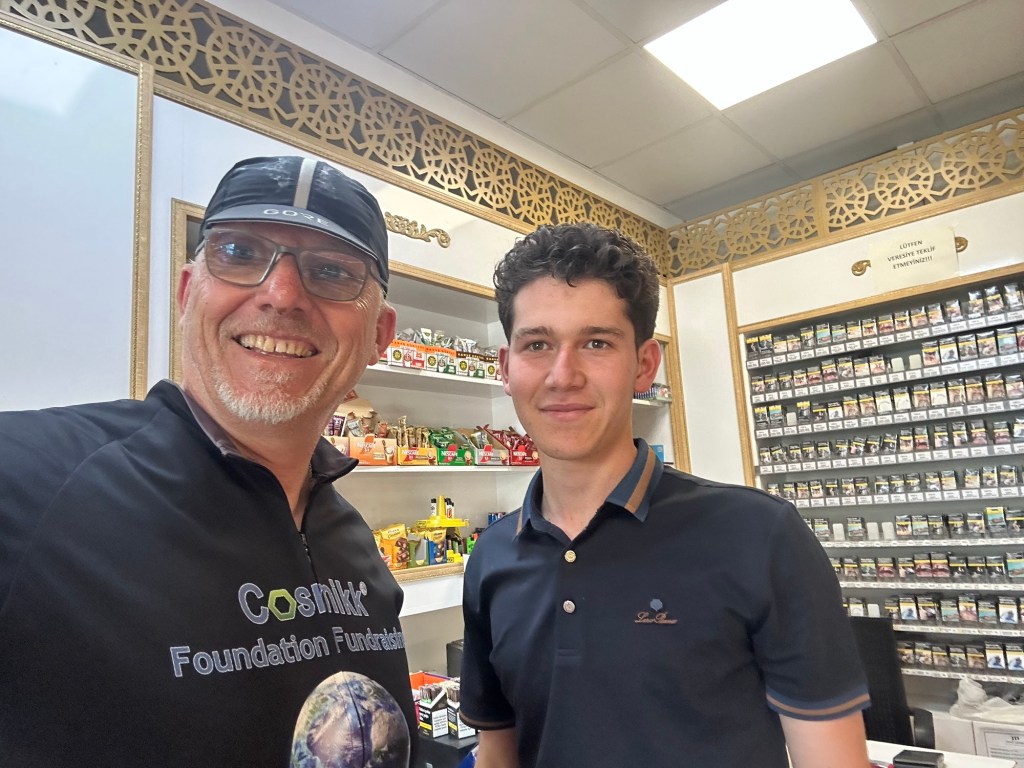
This keeps happening. People here do not have much and they share it without hesitation. If you try to refuse, they just insist. I want to understand more of that. How much is culture and how much is religion.
Claude says: Hospitality holds a central place in Islam. The Arabic concept of diyafa, the welcoming of guests, is considered a religious obligation and a moral virtue. The Quran instructs believers to be generous and not to turn away those in need. The Prophet Muhammad said that whoever believes in God and the Last Day should honor their guest. Offering food, water, and shelter to a traveler is understood not as generosity in the Western sense but as an act of worship. Refusing to give when you are able to give is considered a failing of character.
After Eskil I headed out to find a place to sleep, which was harder than it sounds. The land around Tuz Golu is completely flat. No trees, no hills, no natural cover. The fields here are also on a different scale than what I had seen more towards the west in the Marmara region. They are enormous, more like the collective farms you see in Ukraine than the small plots further west. That scale is not an accident. This area is dry enough that without irrigation it would be desert, and irrigation on this scale requires organized labor and large machinery. Moving the water pipes manually every day takes many hands, and small individual plots would make that impossible. The Turkish government at some point ran pilot programs around Tuz Golu specifically to test whether farming was viable here at all. The answer was yes, but only just, and only with continuous effort.
Climate change will hit this area hard. There is only so much irrigation can do. If temperatures keep rising and the soil dries further, the margin disappears. It is a vulnerable place.
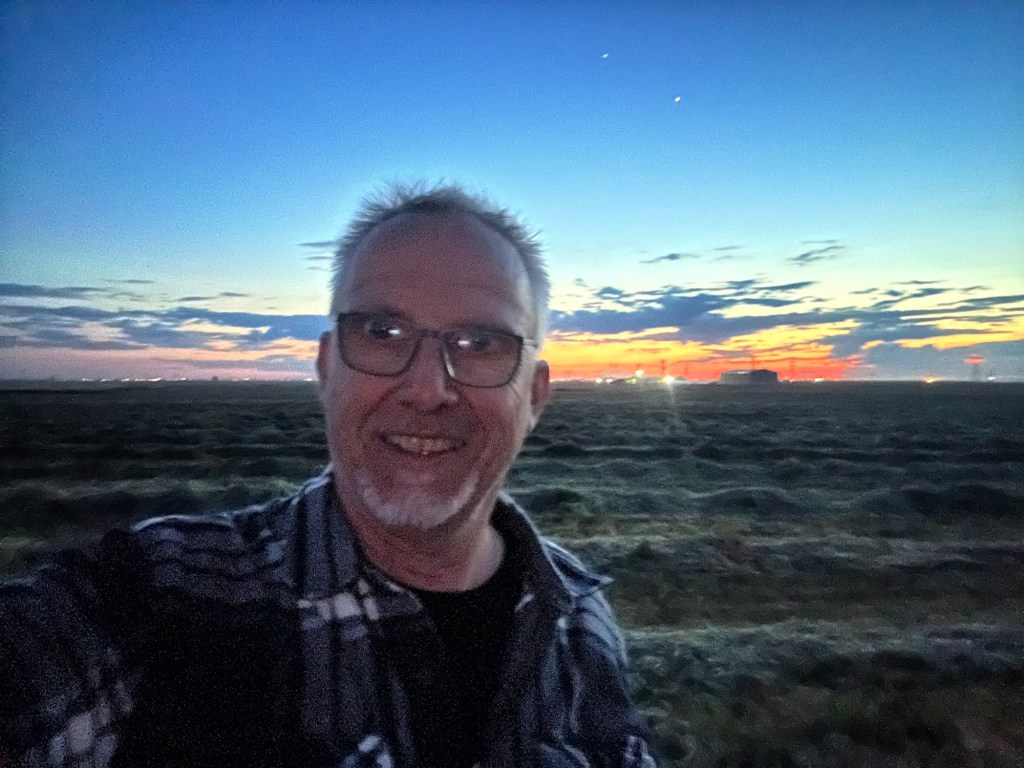
I rode another forty kilometers before I found a spot I felt reasonably comfortable with. A small brick outbuilding, a storage place for field workers by the look of it, a few hundred meters from the road. On flat land like this, sound carries a long way. A dog barking three hundred meters away sounds like it is right next to you. It took a while to settle in. I waited for full dark before washing and making dinner.
Meanwhile, our friend Beate had made it to Baku and had gone to a ticket window to sort out the overnight train from Tbilisi to Baku on my behalf. After forty-five minutes in line, she was told that there were no tickets for this train. So, while it was worth a try that plan did not work out. I need to find another solution.

I was in bed by ten. Sleep was light but not bad. The field around me had been freshly cut and the whole place smelled of hay. That helped.
The learnings of the day. If in doubt, try it out. You regret the things you did not do more than the things you did. Tuz Golu was supposed to be difficult to reach. It was not. Sometimes it is worth stopping and spending time with people even when you are behind schedule. You learn more in those forty-five minutes than in hours of cycling. And the last one: feeling safe has more to do with your own mental state than with what is actually around you. People, as a default, are friendly. In a place where nobody can manage alone and everybody depends on the community, that tends to be especially true.